
88+Is BrumeBlog.com Safe and Legit? An Honest Review and Security Guide
You find a blog you’ve never heard of. The article looks helpful. Then a small voice asks, is BrumeBlog.com safe? That doubt makes sense. Scam pages, content farms, and AI-written filler now crowd the web. This BrumeBlog.com review gives you a clear and honest answer. It covers BrumeBlog.com website security, privacy, content, and more. It also shows you how to run your own checks. Treat it as a practical BrumeBlog.com review 2026 that you can act on today.
What Is BrumeBlog.com?
What is BrumeBlog.com? It appears to be a multi-topic blog. Instead of sticking to one niche, it publishes articles on many subjects. Think of it as a wide street market. You can wander past technology, lifestyle, business, and more in a single visit. This BrumeBlog.com website review starts with that simple picture.
Broad blogs are everywhere now. Years ago, most blogs were personal diaries or expert niche sites. Today, many sites act like publishing machines. They aim for search traffic from many directions. That model is not always dishonest. Still, it shapes how much you should trust what you read.
| Reason Multi-Topic Blogs Exist | What It Means for Readers |
| Search traffic | More topics give more chances to appear on Google |
| Ad revenue | More visitors bring more advertising income |
| Affiliate income | Product links can earn commissions |
| Faster growth | Broad sites often scale quicker than niche blogs |
What Topics Does BrumeBlog.com Cover?
Sites like this usually cover technology, business, health, finance, lifestyle, education, entertainment, and internet trends. Browse the menu and category pages to see the exact list. A wide topic range is not a red flag by itself. However, it does raise a fair question about expertise. A site that writes about cybersecurity in the morning and nutrition at night may lack depth in both.
Who Is BrumeBlog.com Designed For?
The site seems aimed at casual readers. Beginners, curious browsers, and people who want quick answers fit best. The style favors simple explanations over technical detail. That works well for light reading. It works less well for experts who need precise and cited information. Knowing the intended audience helps you set realistic expectations before you click.
How Does BrumeBlog.com Work?
Most blogs of this type publish free articles and earn money through ads or affiliate links. Visitors usually read without creating an account. Check this yourself on the live site. Look for login prompts, paywalls, or newsletter pop-ups. The fewer demands a site makes, the lower your risk. Simple access is a good sign for casual readers.
Why Are People Searching for “Is BrumeBlog.com Safe?”
People have grown careful online. Fake shops, phishing emails, and fake download buttons taught them to pause. So when an unknown blog shows up in search results, many readers check it first. That habit is smart. A quick website safety check takes a few minutes and can save you a lot of trouble.
Doubt is healthy. But unfamiliar does not mean dangerous. Many small sites are harmless and simply lack fame. This BrumeBlog.com safety review separates real danger from simple obscurity. You will see which concerns are serious and which are just normal worries about new websites.
Common Concerns About Unfamiliar Websites
Readers usually worry about five things. They fear malware, false information, data collection, outright scams, and robot-written text. Each worry is fair. Hackers do hide harmful scripts inside ordinary-looking blogs. Some sites copy articles and fill them with deceptive ads. Learning the online scam warning signs helps you judge any page quickly. This guide covers each one in the sections below.
Why Smaller Multi-Topic Blogs Attract Attention
Small blogs lack big brand names. They also cover many subjects and rarely show clear expert credentials. That mix makes readers curious and sometimes uneasy. People ask who runs the site and why it exists. A BrumeBlog.com website review must address those questions honestly. Low fame alone proves nothing. Yet it means you must check more things on your own.
Is BrumeBlog.com Safe to Visit?
Safety has two sides. Technical safety asks whether the site can harm your device. Information safety asks whether the articles are correct. These are different questions. A site can be technically clean and still publish weak advice. This BrumeBlog.com security check looks at both sides separately.
So what should you check first? Start with the secure connection. Then look at reputation scans, redirects, and download behavior. Free tools like the Google Safe Browsing Transparency Report and VirusTotal show whether a domain has been flagged. Run them before you trust any result you read, including this one. Fresh scans beat old opinions.
How to Check HTTPS and SSL Security
Look at the address bar. A padlock icon usually means the site has an HTTPS and SSL certificate. Click the icon to see who issued it and when it expires. Then confirm that the address starts with “https://”. This simple step is one of the main website security indicators. It shows that data moves in encrypted form between your browser and the site.
What HTTPS Does Not Guarantee
Many readers think a padlock means a site is honest. It does not. Certificates are cheap and easy to get. Scam shops use them every day. HTTPS only proves that the connection is private. It says nothing about the owner, the facts, or the intentions behind the pages. Use it as a first checkpoint and never as your final answer on website security.
Malware, Suspicious Redirects, and Download Risks
Malware detection starts with your own eyes. Watch for pages that jump to other sites without a click. These suspicious website redirects often come from bad ads or infected scripts. Be careful with fake download buttons and files that start downloading on their own. A trusted blog should simply show articles. If a page pushes software at you, close it right away.
Warning Signs of a Potentially Dangerous Website
Some signals matter more than others. The table below ranks them so you can react fast.
| Warning Sign | Why It Matters | Risk Level |
| Fake virus alerts | Classic scareware trick | High |
| Forced downloads | Possible malware delivery | High |
| Browser hijacking | Takes control of your settings | High |
| Repeated redirects | Often linked to harmful ads | Medium-High |
| Missing contact details | Hides who runs the site | Medium |
| No privacy policy | Weak data transparency | Medium |
| Overloaded ads | Signals a money-first approach | Medium |
Is BrumeBlog.com Legit or a Scam?
Many people mix up two ideas. A scam site tries to steal money, passwords, or data. A weak site simply publishes thin content to chase traffic. The first is criminal. The second is merely annoying. A fair BrumeBlog.com scam check keeps these two ideas apart.
This section reports only what you can confirm. Guessing about a site’s owner or motives would be unfair. Instead, the focus is on observable signals. You will see what supports BrumeBlog.com legitimacy and what deserves a closer look. The goal is to help you answer BrumeBlog.com legit with evidence.
Signs That May Support Website Legitimacy
Several signals point toward an ordinary blog. The content opens without a payment wall. Menus work. Pages load normally. No one asks for your card details. Searching the domain name also turns up no loud scam complaints at the time of writing. These points help the BrumeBlog.com online reputation. They do not prove expertise. They only show the absence of classic scam behavior.
Red Flags That Deserve Further Investigation
Other signals call for more digging. Hidden ownership is one. Vague or missing author names are another. Thin articles that repeat the same ideas should also make you pause. Aggressive ads add to the worry. None of these makes a site criminal. Together, though, they weaken BrumeBlog.com website credibility. Check each one yourself before you decide.
What Can and Cannot Be Confirmed About BrumeBlog.com
Honesty matters here. Some facts are easy to check. Others stay unknown until you investigate. The table below shows the difference.
| Item | Status | How to Confirm |
| The site works as a multi-topic blog | Appears so from public pages | Browse the categories |
| Free access to articles | Appears so | Visit without signing in |
| Owner identity | Cannot be assumed | Use a WHOIS lookup |
| Author expertise | Cannot be assumed | Read author pages and bios |
| Malware-free status today | Needs a fresh scan | Use VirusTotal |
| Privacy practices | Needs a policy review | Read the privacy page |
Why Website Appearance Alone Cannot Prove Trustworthiness
Looks can fool you. Imagine two fictional sites. Site A has a sleek design, an HTTPS padlock, and fancy animations. Yet it quietly steals payment details. Site B looks plain and a little clumsy. However, it asks for nothing and publishes harmless tips. Which one is safer? Often it is Site B. This case shows why BrumeBlog.com is trustworthy or not depending on behavior and not on polish.
Does BrumeBlog.com Protect Your Privacy?
Every website visit leaves a small trail. Your device type, location estimate, and pages viewed can all be logged. That sounds scary. But it is normal for most sites. News portals and online stores do the same. The real question is how a site uses that data. Good online privacy protection starts with knowing what is collected.
Normal analytics differ from real privacy problems. Trouble starts when a site sells data, hides trackers, or demands needless permissions. A clear BrumeBlog.com privacy policy helps you judge this. Strong privacy policy transparency builds trust. A missing or vague policy does the opposite.
Does BrumeBlog.com Collect Personal Information?
Most blogs collect basic technical data. This often includes your IP address, browser type, device, and the pages you read. Look for a privacy page and read what it promises. A trustworthy policy names the data collected and the reason for it. Strong personal information security also means the site should not ask for more than it needs. If a casual blog wants your phone number, walk away.
Cookies, Analytics, and Online Tracking
Cookies are small files that sites store in your browser. Some remember your settings. Others track your visits across pages. Analytics tools use these cookies and tracking technologies to count readers. You can limit them through browser settings or a cookie banner. Block third-party cookies when you can. This reduces tracking without breaking most blogs.
Registration, Payment Requests, and Data Privacy
Sites that need no sign-up and no card are lower risk. You share no passwords and no payment data. That is a real advantage for casual reading. If the site later asks you to register, slow down. Check the privacy page first. Never enter card details on a page you haven’t verified. A simple rule applies here: no need, no data.
How to Protect Your Personal Information
Small habits make a big difference. Use a unique password for every account. Create a separate email address for unknown sites. Turn on two-factor login wherever you can. Avoid typing sensitive details into unverified pages. These steps support digital privacy protection across the whole web. They protect you even when a site turns out to be weak.
BrumeBlog.com Content Quality and Credibility
A safe site is not always a good source. This difference trips up many readers. A page can load without any malware and still give wrong advice. So BrumeBlog.com content quality deserves its own review. You should judge the writing as carefully as the code.
Quality shows up in small details. Strong sites name their writers. They cite sources and update old posts. They also explain ideas with real depth. The table below lists the main signals. Use it to measure BrumeBlog.com website credibility on any article you open.
| Quality Signal | Why It Matters |
| Named expert authors | Shows subject knowledge and accountability |
| Citations and links | Proves the claims have backing |
| Original analysis | Shows real thinking beyond copied ideas |
| Data and examples | Improves content accuracy |
| Balanced explanations | Reduces the spread of misinformation |
Are BrumeBlog.com Articles Accurate and Reliable?
Judge accuracy by depth, detail, and consistency. Read two or three articles on a topic you know well. Do the facts match trusted sources? Do the claims include dates, numbers, or examples? Broad and vague statements are a warning. Good content accuracy comes with specifics. Test the site on a subject where you can spot errors easily.
Author Information, Sources, and References
Look for a clear byline on each post. Then check for an author bio that lists real experience. Author transparency builds trust fast. Next, scan for source links at the end or inside the text. Posts with no references ask you to trust blindly. That is risky for any topic. Reliable writers show where their facts come from.
Content Freshness, Originality, and Editorial Quality
Check the publish date and any update date. Old posts about fast-moving topics can mislead you. Look at originality too. Does the article offer fresh insight or just repeat common advice? Spot spelling errors and broken links. Weak editorial standards often show up in these small flaws. Fresh and polished posts suggest more care behind the scenes.
How to Identify AI-Assisted or Low-Quality Content
AI-generated content detection starts with pattern spotting. Repeated phrasing, generic claims, and a very predictable structure are common clues. Real personal experience is usually missing. Still, AI help is not automatically bad. A careful editor can use it well. The real test is whether the article is accurate, useful, and checked by a person. These are also the content farm concerns many readers raise.
Can You Trust BrumeBlog.com for Important Information?
The answer depends on the stakes. For light topics, it may serve you well. For health, money, law, or security, treat it as a starting point only. Always confirm key claims with authoritative information sources. This habit gives you reliable online information no matter where you read. Think of the blog as a friendly neighbor and not a licensed expert.
BrumeBlog.com Features and User Experience
User experience reveals how seriously a site is run. Clean menus and fast pages suggest care. Messy layouts and slow loading suggest haste. This part of the BrumeBlog.com review looks at how the site feels in daily use. It focuses on the main BrumeBlog.com features that readers notice first.
Overall, the BrumeBlog.com user experience should feel simple. You should find articles quickly and read them without distractions. Test it yourself for a few minutes. Open three pages and note any pop-ups or odd behavior. Your own impression often tells you more than any outside opinion.
Website Design, Layout, and Navigation
Good design guides your eyes. Look for a clear menu, a working search bar, and related article links. Check how fast pages load. A confusing layout wastes your time. A tidy one helps you trust the site a little more. Remember that looks do not prove safety. They only show some effort toward a decent website user experience.
Categories and Article Organization
Categories help readers find topics fast. A strong blog groups posts in a clear order. Related posts should link to each other. If the site feels like a random pile of articles, that signals weak planning. Try browsing two or three categories. See whether the posts inside match their labels. Good organization is a quiet sign of editorial care.
Readability and Mobile Compatibility
Easy reading matters. Short paragraphs, clear headings, and plain words help casual readers. Next, open the site on your phone. Text should fit the screen without sideways scrolling. Buttons should be easy to tap. A site that breaks on mobile frustrates users quickly. Mobile-friendly design is now a basic standard for any modern blog.
Read More About: 45+Xendit Gamification Summit at Work: What It Is, How It Works, and What You Should Know
Advertisements and Potentially Aggressive Monetization
Ads are not evil. Most free sites rely on them. Trouble begins when ads take over. Watch for auto-playing videos, screen-blocking pop-ups, and fake download buttons. These tricks harm trust. If you see them here, leave. If the site shows only light, clearly marked ads, that is a good sign. Check carefully, because ad networks can change over time.
Is BrumeBlog.com Free to Use?
Reading appears to be free. Most blogs of this type earn money through ads and affiliate links. You should not need to pay for casual reading. Treat any payment request as a red flag. Verify it before you enter a single card digit. Free access is a plus for the BrumeBlog.com pros and cons list, but free content still needs checking.
Is BrumeBlog.com Safe on Mobile Devices?
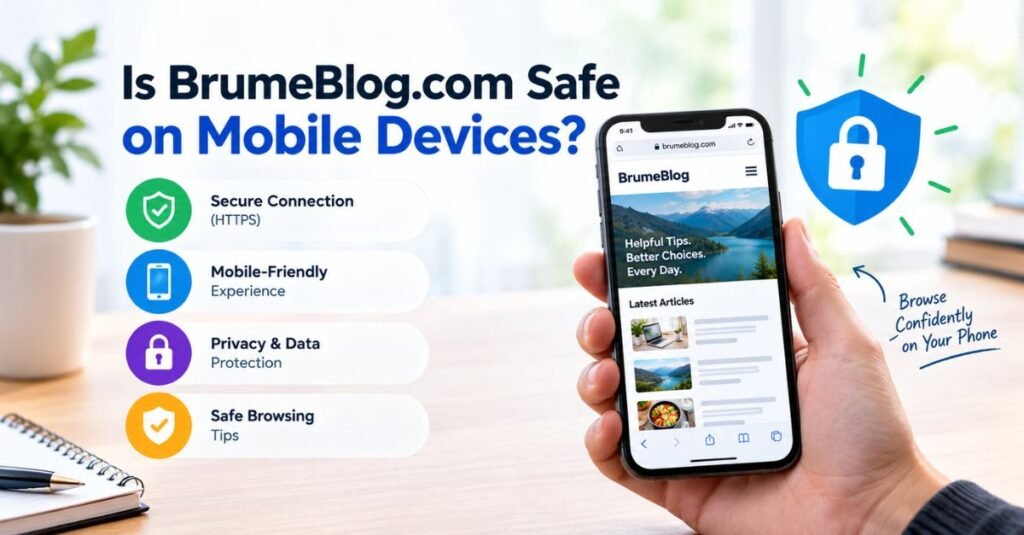
Phones carry extra risk. Screens are small and the address bar often hides. People also tap fast without thinking. Those habits help tricksters. So BrumeBlog.com mobile safety deserves special care. A page that feels fine on a laptop can behave very differently on a phone.
Visit the site on your phone and watch closely. Does it open cleanly? Does it ask for notifications right away? Does it try to open an app store? Those moments show how the site treats mobile users. Good mobile browsing security starts with noticing these early signs.
Common Mobile Browsing Risks
Mobile pages can trigger full-screen redirects and fake virus alerts. Some push notification traps trick you into allowing spam. Others send you to app store scams. These tricks target rushed users. They work because phones make it hard to check the real web address. Slow down whenever a page behaves oddly. A pause often saves you from a bad tap.
Safe Browsing Tips for Smartphones and Tablets
Good safe browsing practices work on every device. Deny notification requests from unknown sites. Never install APK files from a blog. Keep your browser and operating system updated. Turn on built-in safe browsing tools. The table below sums up the key steps.
| Habit | Benefit |
| Deny notifications | Stops spam and push traps |
| Skip unknown app installs | Avoids hidden malware |
| Update your browser | Patches known weaknesses |
| Use safe browsing tools | Warns you before danger |
BrumeBlog.com Pros and Cons
Every site has strengths and weaknesses. A balanced view helps you decide without bias. The BrumeBlog.com pros and cons below come from general indicators and not from a lab test. Treat them as a snapshot and confirm each point yourself.
The table gives a quick side-by-side view. After that, two short sections explain each side in more detail. Use them to match the site to your own needs. A reader who wants light tips will weigh these points very differently from a student writing a research paper.
| Pros | Cons |
| Easy reading style | Limited transparency |
| Free access | Unclear authorship |
| Wide topic range | Generic depth possible |
| No sign-up needed | Credibility harder to verify |
Potential Advantages of BrumeBlog.com
The site offers simple writing and free access. You can read without making an account. The wide topic range lets you explore many subjects in one place. For a casual reader, that is convenient. These traits make the site pleasant for light browsing. They also keep your personal information security risk low, since the site asks for little.
Limitations and Reasons to Be Cautious
The main weakness is credibility. Ownership details may be unclear. Author names and expertise may be hard to find. Articles may also stay broad and shallow. These gaps hurt BrumeBlog.com trustworthiness for serious topics. They do not prove bad intent. They simply mean you should double-check any claim that really matters.
BrumeBlog.com vs. Established Websites
Comparing a small blog with a major publisher shows where each one stands. Big sites usually have stronger systems. They employ editors, fact-checkers, and named experts. A small blog may lack all three. This comparison helps you set fair expectations for BrumeBlog.com website credibility.
Big sites still make mistakes. Even famous publishers publish errors and later correct them. Size does not equal perfection. However, large outlets usually invest more in checking facts. That investment tends to raise online information reliability. The table below shows the usual differences.
| Feature | BrumeBlog.com | Established Authority Sites |
| Brand recognition | Lower | Higher |
| Editorial oversight | Unclear | Structured |
| Expert contributors | Limited visibility | Common |
| Research depth | Mixed | Usually stronger |
| Transparency | Varies | Typically clearer |
Comparing Security, Credibility, and Content Quality
On security, both can be safe if they use HTTPS and avoid harmful ads. On credibility, established sites usually win because of named staff and public standards. On content quality, depth and sourcing make the difference. A well-known site often cites studies and experts. A small blog may just summarize. Use this three-part test on any site you visit.
What Established Websites May Do Better
Large publishers often run formal editorial checks. They list writers, publish correction policies, and cite sources. They also keep clear contact details. These habits support website trust signals and make mistakes easier to catch. A reader who wants high-stakes facts should lean on these sources first. They are not flawless. They just give you more ways to hold them accountable.
Read More About: Goralblue.com Review 2026: A Complete Guide to Travel, Lifestyle, and Digital Content
When a Smaller Blog Can Still Be Useful
Small blogs have real charm. They explain ideas simply and publish quickly. They avoid heavy jargon. For a basic overview, that can be enough. A quick read can even prepare you for deeper research later. Just treat the information as a first draft. Then confirm important parts with stronger trustworthy online resources.
Who Should Use BrumeBlog.com?
The answer depends on what you need. If you want a quick, easy read, the site may fit well. If you need expert guidance, look elsewhere. Matching the source to the task is the smartest habit online. It protects you from both disappointment and bad advice.
Here is a simple rule of thumb. Low stakes allow low-cost sources. High stakes demand strong sources. A recipe idea carries little risk. A medical decision carries a lot. Keep that line clear in your mind. It will guide most of your reading choices.
A good rule: the more a decision can cost you, the more sources you should check.
When BrumeBlog.com May Be Useful for Casual Reading
Use it for entertainment topics, lifestyle ideas, and basic technology overviews. Simple productivity tips also fit here. These subjects carry low risk if a detail is slightly off. You get a friendly read and a fresh idea. That is often all a casual reader wants. Enjoy it, but keep a relaxed skepticism.
When Readers Should Look for More Authoritative Sources
Choose stronger sources for professional research and anything that affects money or health. Students, analysts, and business owners need verified facts. Cited studies and expert-written guides serve them better. Seek authoritative information sources such as medical institutions, government agencies, and official documentation. A quick blog post should never carry the full weight of a serious choice.
Topics That Require Independent Verification
Some topics need extra care. Medical, financial, legal, and cybersecurity advice can cause real harm if wrong. Use independent source verification for every claim in these areas. The table below suggests better source types.
| Topic | Better Source Types |
| Health | Medical institutions and licensed doctors |
| Finance | Licensed financial platforms and regulators |
| Cybersecurity | Official vendor documentation |
| Government topics | Official agency websites |
| Science | Peer-reviewed publications |
How to Check Whether BrumeBlog.com Is Trustworthy
You don’t have to rely on anyone’s opinion. You can test the site yourself in about ten minutes. A short, repeatable routine works on almost any domain. This section gives you that routine. It turns the question BrumeBlog.com trustworthy or not into something you can answer with facts.
The toolkit below uses free resources. You will check ownership, scan the link, and compare claims with strong sources. Do each step in order. Write down what you find. A clear record helps you spot patterns and make a calm decision.
A Practical Website Safety Checklist
Use this digital safety checklist each time you meet a new site. Ask each question and note the answer.
| Question | Why It Matters |
| Are authors identified? | Shows accountability |
| Are sources cited? | Supports accuracy |
| Is contact information available? | Improves transparency |
| Does the site overload ads? | Signals a money-first focus |
| Are claims exaggerated? | May point to clickbait |
| Does the content feel generic? | Possible low expertise |
How to Verify Website Ownership and Contact Details
Website ownership verification begins with a domain lookup. Use the free ICANN Lookup to see registration details. Many owners hide personal data for privacy, and that is common. Look at domain age too. Very new domains deserve extra care. Then open the About and Contact pages. A real contact method adds to author transparency and shows accountability.
How to Check Articles Against Reliable Sources
Pick one claim from an article. Search for the same fact on a trusted site. Do the numbers match? Try to find the original study or report. If you cannot trace a claim back to a source, treat it with caution. These fact-checking methods take only minutes. They also build your skill at spotting weak writing everywhere.
Tools for Checking Suspicious Links and Website Security
Several free tools can help. Run a website reputation check with the Google Safe Browsing Transparency Report. Paste the link into VirusTotal for a multi-engine scan. Use a DNS checker to confirm that domain records look normal. For general scam guidance, the FTC consumer advice site is a helpful reference. Together, these tools support strong online threat detection.
Smart Safety Tips for Browsing Unfamiliar Websites
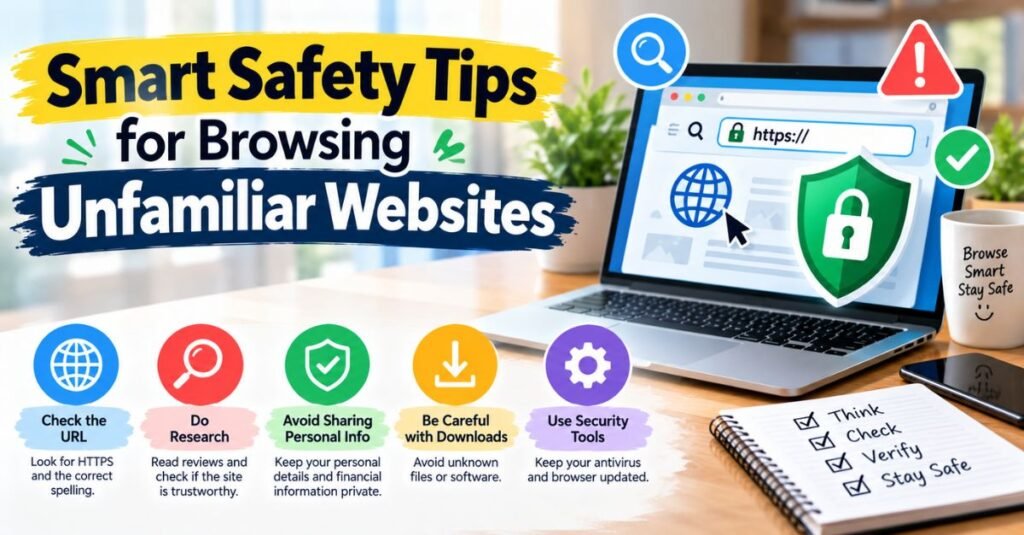
Safety depends on habits more than on any single site. A careful visitor stays safe even on a messy page. A careless one can get hurt on a polished page. So build good routines. They protect you across the entire web and not just on this blog.
These tips work for every website you open. Learn them once and use them daily. They are simple and cost almost nothing. Together they form a solid base for safe browsing practices and a calmer, more secure browsing experience.
Keep Your Browser and Security Software Updated
Updates fix known weaknesses. Modern browsers include phishing alerts, dangerous site warnings, and script protection. Old versions miss these shields. Turn on automatic updates for your browser, phone, and security software. This one habit blocks many attacks before they start. It also supports strong phishing and malware risks defense with almost no effort.
Avoid Suspicious Downloads and Pop-Ups
Never download a file you did not expect. Random ZIP files and installers are major warning signs. Close pop-ups that claim your device is infected. They are almost always fake. Real security alerts come from your own software and not from a web page. Practice suspicious pop-up prevention by closing the tab and never clicking inside the box.
Use Ad Blockers and Privacy Settings Carefully
Good ad blockers cut harmful ads, trackers, and redirects. Choose well-known tools from official stores. Avoid shady extensions, because some of them steal data. Also review your browser privacy settings. Block third-party cookies and limit location sharing. Remember that many sites rely on ad income. You can allow ads on sites you trust and want to support.
Read More About: Best Wireless Earbuds of 2026: Top Picks for Sound, ANC, Comfort & Value
Never Share Sensitive Information Without Verification
Do not type passwords, card numbers, or ID details on an unverified page. Confirm the site first with the checks above. Turn on two-factor authentication for your key accounts. Use a password manager to create unique passwords. If a blog asks for sensitive data, that alone is a red flag. A reading site should never need your bank details.
Is BrumeBlog.com Safe and Worth Visiting?
Here is the short answer. Is BrumeBlog.com safe for casual reading? Based on general indicators, it looks like an ordinary low-risk blog. It does not show the loud signs of classic scam behavior. However, no review replaces a fresh scan. Run the tools above before you rely on this conclusion.
The real concern is credibility and not immediate danger. Safe and authoritative are different things. A site can be harmless and still shallow. That balance defines this BrumeBlog.com safety review. Visit with care, read with a questioning mind, and verify anything important.
What Readers Should Know Before Visiting
Three points sum it up. First, technical risk looks low for casual browsing but needs a fresh check. Second, BrumeBlog.com privacy policy and ownership details deserve a quick look. Third, the content suits light topics better than serious ones. Keep these points in mind and you will avoid most problems.
Is BrumeBlog.com Legitimate and Reliable?
Legitimate and reliable are not the same word. A site is legitimate when it does not try to scam you. It is reliable when its information holds up. BrumeBlog.com legitimacy appears plausible from the visible signals. Reliability remains unproven without clear authors and sources. So treat it as a legitimate blog with a modest level of authority.
Should You Use BrumeBlog.com?
Use it for casual reading, general browsing, introductory explanations, and low-risk topics. Verify elsewhere for health decisions, financial planning, legal advice, professional research, and security guidance. That balanced approach works best online today. It lets you enjoy easy content while protecting yourself from costly mistakes.
FAQ,s
This FAQ gives short and direct answers. Each one repeats the main points from the guide. Use it as a quick reference when you are in a hurry. The answers also reflect a general BrumeBlog.com review 2026 view and not a live lab test.
Remember that websites change. A clean site today can carry bad ads tomorrow. Recheck with the tools listed earlier whenever something feels off. Fresh checks always beat old opinions. Now let’s go through the most common questions.
Is BrumeBlog.com safe to visit?
It appears low risk for casual reading. It does not show obvious scam behavior. Still, run a fresh scan with VirusTotal and Google Safe Browsing. Avoid suspicious ads, downloads, and notification requests. Safe habits matter more than any single verdict.
Is BrumeBlog.com a scam website?
There are no clear signs that it works as a classic scam. It does not seem to demand payment or steal logins. However, is BrumeBlog.com a scam is a question each reader should test personally. Check ownership, privacy details, and ad behavior before you decide.
Does BrumeBlog.com contain malware?
No widely known reports strongly link it to major malware threats. That can change at any time. Use malware detection tools to scan the link yourself. Close the page if it forces a download or loops through redirects.
Does BrumeBlog.com collect personal information?
Like most sites, it likely collects basic data such as IP address, device type, and pages viewed. Read the privacy policy to learn the details. Avoid giving personal information unless you truly need to. A casual blog should not ask for much.
Is BrumeBlog.com free to use?
Reading appears to be free. The site likely earns money through ads or affiliate links. Treat any request for payment as a warning sign. Verify the reason before you share card details.
Can you trust information published on BrumeBlog.com?
Some articles may help with simple topics. However, author details and sources can be hard to find. Confirm important claims with strong, authoritative sources. Never base a major decision on one blog alone.
Is BrumeBlog.com safe for mobile users?
It seems usable on phones. Still, mobile screens hide web addresses and invite rushed taps. Deny notification prompts and avoid APK files. Keep your browser updated and use built-in safe browsing tools.
What should you do if BrumeBlog.com displays suspicious pop-ups?
Close the tab right away and do not click inside the pop-up. Clear the site’s data and cookies from your browser. Then run a scan with trusted security software. If a file was downloaded, delete it without opening it. Report the site through your browser’s safe browsing feedback tool.
Conclusion
The web rewards speed and search rankings. Those goals do not always match trust and quality. That is why careful readers research new sites first. This BrumeBlog.com review shows a fairly ordinary multi-topic blog. It does not display the loud warning signs of a dangerous operation. For casual browsing, the risk looks low.
Still, the bigger question is credibility. A safe page can carry weak advice. So browse with care and verify what matters. Run your own website safety check and trust no single source blindly. With smart habits, you stay in control wherever you click.