
Xuzhanikanoz3.2.5.0 Explained: Meaning, Reported Features, Safety, and Verification Guide (2026)
Xuzhanikanoz3.2.5.0 looks like a software file at first glance. Maybe you saw it in a search result. Maybe a friend sent you the name. Either way, you want to know if it’s a useful tool or a trap. Here’s the short story. The name looks like a program with a version number. Yet no trusted source confirms a developer, a manual, or an official download.
That gap matters. This guide explains the meaning, the reported features, and the safety questions. You’ll also get a simple software verification guide that works on any strange file. The language stays plain and the steps stay short. Read on, and you’ll know what to check before you click anything.
What Is Xuzhanikanoz3.2.5.0?
If you ask What is Xuzhanikanoz3.2.5.0, the honest answer is short. It’s an unverified tech term. It has two parts. The first part, “xuzhanikanoz,” looks like a product name, a project name, or a codename. The second part, “3.2.5.0,” looks like a release number. Together they resemble a program name with a version tag. That’s the only firm thing anyone can say.
A software-looking name doesn’t prove that software exists. Anyone can invent a name and add numbers to the end. Real programs leave a trail. You usually find a named developer, a product page, release notes, system requirements, and a support contact. You also find a download link you can trace. For Xuzhanikanoz3.2.5.0 software, that trail is missing. This doesn’t make it fake. It means the evidence is thin. Careful readers should treat the Xuzhanikanoz3.2.5.0 meaning as open until a primary source appears.
Quick Answer: What We Know About Xuzhanikanoz3.2.5.0
Here’s the quick answer. No reliable public document confirms what Xuzhanikanoz3.2.5.0 is. The number at the end looks like a version. Websites describe it in very different ways. No clear developer, Xuzhanikanoz3.2.5.0 official website, or verified download source exists today. Treat every feature claim as unconfirmed. Treat every file with this name as unknown until you check it.
The table below sorts the facts from the claims. It helps you see what stands on solid ground. Use it as a map for the rest of this guide. Each row links to a section where you can read more. This kind of unknown software identification habit protects you from hype. It also keeps you from panic. You don’t need to fear the name. You just need to check the file.
| Topic | Current Status |
| Purpose | Unclear and described in conflicting ways |
| Developer | Not reliably identified |
| Reported features | Reported online, not confirmed |
| Official download source | Not clearly established |
| Malware status | No reliable evidence either way |
| Safety | Cannot be confirmed without checking the actual file |
What Does the 3.2.5.0 Version Number Mean?
The sequence 3.2.5.0 looks like a software version number. Developers use numbers like this to label each release. A higher number usually means a newer build. Users and support teams rely on these labels to track fixes and changes. However, only the creator can say what each digit stands for. Nobody has published that key for Xuzhanikanoz version 3.2.5.0. So the exact meaning stays unknown.
A version number is still a useful clue. It hints that earlier builds may exist. A genuine “3.2.5.0” would normally follow a “3.2.4.0” or a “3.1.0.0.” That trail is called a Xuzhanikanoz version history. You can’t find a confirmed one right now. This is a gap worth noting. A number alone proves nothing. Anyone can type “3.2.5.0” after a made-up word.
Understanding Four-Part Software Version Numbers
Four-part version numbers are common. Windows programs often use a format of major, minor, build, and revision. Microsoft explains this layout in its version resource documentation. Under that pattern, 3 would be the major release and 2 the minor release. The 5 would be the build and the 0 the revision. The table below shows this as an example only. The developer of this name hasn’t confirmed any of it.
| Part | Example Meaning |
| 3 | Major release |
| 2 | Minor release |
| 5 | Build number |
| 0 | Revision |
Is 3.2.5.0 a Semantic Version Number?
Not strictly. Semantic Versioning uses three numbers: major, minor, and patch. A four-part number like 3.2.5.0 doesn’t match that rule. Many projects still use four parts for their own reasons. Some use dates. Others use build counters. The trailing zero tells you very little. It doesn’t prove the file is real. It doesn’t prove the file is safe. It only shows that the label follows a familiar pattern.
Why Is Xuzhanikanoz3.2.5.0 Difficult to Identify?
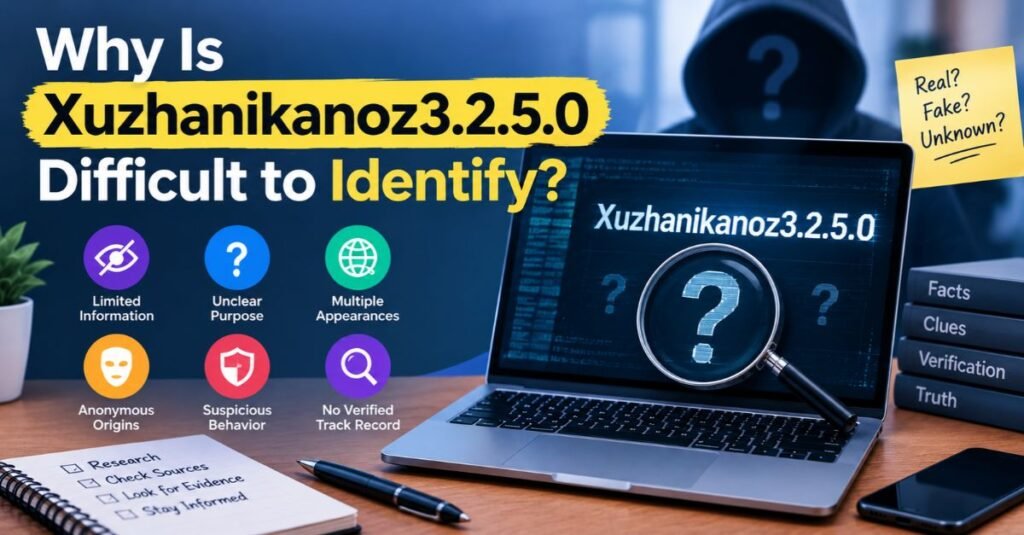
The problem isn’t a lack of pages. Many sites mention Xuzhanikanoz3.2.5.0. The real problem is a lack of agreement. One page says it cleans your phone. Another says it runs marketing campaigns. A third says it’s only a build label. These claims can’t all be true. When descriptions clash like this, a careful reader should pause.
Think of a “many mentions” result as noise. Think of a “verified source” result as signal. A verified source comes from the maker of the product. It might be a company site, a code repository, or an app store page. Without that anchor, each writer fills the gap with a guess. That’s why Xuzhanikanoz software stories vary so much. Good unknown software identification starts with this simple split.
Conflicting Online Descriptions
Online pages give this name many jobs. Some call it device optimization software. Some call it a battery tool. Others call it a security scanner or a workflow platform. These products serve very different users. An optimizer works inside your phone or PC. A campaign platform serves marketing teams in a browser. One name can’t sensibly do both. The table below shows how wide the claims run.
| Claimed Role | Typical User | Where It Would Run |
| System optimizer | Phone or PC owner | On the device |
| Battery manager | Mobile user | On the device |
| Security tool | Any user | On the device |
| Productivity platform | Office worker | Device or browser |
| Campaign manager | Marketing team | Mostly in a browser |
Why Repeated Online Claims Are Not Proof
Picture a rumor at a party. One person says it. Five more repeat it. By the end, everyone treats it as fact. Yet nobody checked the source. Blogs work the same way. They copy and reword each other. Repetition looks like proof but isn’t. Independent evidence matters more. Look for a developer statement, a signed file, or a public code page. That’s the standard for online information verification.
What Features Are Reported for Xuzhanikanoz3.2.5.0?
Several sites list Xuzhanikanoz features. Treat all of them as Xuzhanikanoz3.2.5.0 reported features. That means someone wrote them down. It doesn’t mean anyone tested them. The lists keep changing from page to page. That alone should make you careful. A real product keeps one stable feature list on its own site.
Read More About: How to Install 35-ds3chipdus3: Easy Step-by-Step Guide for Beginners
Real specifications come from solid places. Examples include official manuals, release notes, signed installers, and app store listings. None of these exist for this name in a verified form. So a claim like “it extends battery life by 30 percent” has no support. The sections below cover each reported feature. Each one gets a plain explanation and a caution. A Xuzhanikanoz review 2026 should never present these claims as facts.
Cache and Temporary-File Cleaning
Many pages say the tool does temporary file cleaning. Cache cleaners claim to free space by deleting old data. Some of that data is harmless. Some of it keeps apps running fast. Aggressive cleaners can remove files that apps still need. They can also ask for deep access to your storage. Cleaning tools from unknown makers deserve extra care. Your phone and PC already include built-in cleanup options that come from trusted vendors.
Battery and Device Optimization
Another reported claim is battery optimization claims. The pitch says the tool saves power and speeds up your device. Modern systems already manage power well. Android and iOS both limit background activity on their own. Windows and macOS do the same. Extra “booster” apps often add little. Some even drain more power by running all day. Be wary of any promise of big gains without test data. Real system optimization tools show measurable results and name their method.
App Management and Application Freezing
Some pages claim the tool can freeze or pause apps. This is application management software territory. Freezing stops an app from running in the background. It sounds handy. However, it needs deep system permissions. An unknown tool with that power is a risk. It could see what you run and when. It could also block apps you need. Only grant such access to software from a verified, well-known publisher.
Workflow and Productivity Management
Other pages describe productivity management tools such as task boards, reports, and automation. This clashes with the optimizer claims. A battery saver and a campaign planner aren’t the same product. The mismatch is a warning sign. Real products have a clear focus. They explain their purpose in one or two sentences on their own site. When a name carries too many unrelated jobs, the feature list probably came from guesswork.
Customizable Dashboard and Dark Mode
Some lists mention a custom dashboard and a dark mode. These are common features. Nearly any app can claim them. Because they fit everything, they prove nothing. A feature list built from generic items can’t identify a product. Look for details that only a real program would share. Examples are menu names, screenshots from the real app, supported file types, and version-specific changes.
Cross-Platform Compatibility Claims
A few pages say it works on many systems. This is a cross-platform software support claim. It would mean one product runs on Windows, Android, macOS, and Linux. That takes real engineering work. Each system needs its own build and testing. No verified list of supported systems exists for this name. Until the developer publishes one, treat the claim as unconfirmed. A wrong-platform file is also a warning sign by itself.
| Reported Feature | Status |
| Cache cleaning | Reported online, not confirmed |
| Battery optimization | Reported online, not confirmed |
| App freezing | Reported online, not confirmed |
| Workflow management | Reported online, not confirmed |
| Custom dashboard and dark mode | Reported online, not confirmed |
| Cross-platform support | Reported online, not confirmed |
Is Xuzhanikanoz3.2.5.0 Real Software?
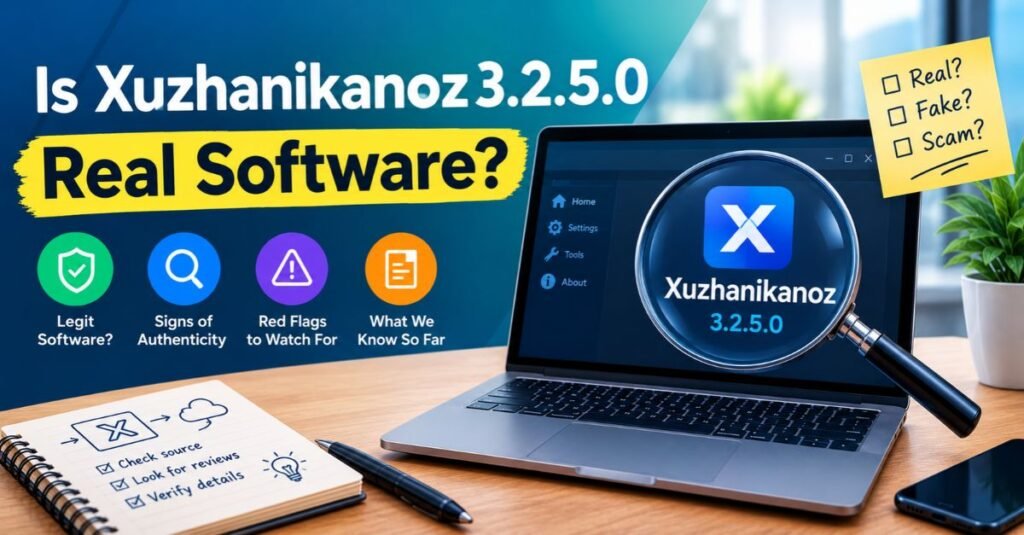
Nobody can confirm it as an established product from reliable public sources. That’s the plain answer. A product that exists leaves proof. You’d see a maker, a site, and a release record. Those pieces aren’t clearly present here. So careful writers describe it as an unverified term with a software-style label.
Still, “unverified” doesn’t mean “fake.” It also doesn’t mean “safe.” It means the evidence is missing. Someone may publish proof tomorrow. If that happens, the facts will change. Until then, the smart move is to hold judgment. Weigh what you can verify. Set aside what you can’t. This balanced view is the heart of any software authenticity check.
What Is Verified, Reported, and Still Unknown?
Sort the facts into three piles. The verified pile is small. The term exists online and ends in a version-like number. The reported pile is bigger. It holds all the feature claims from blogs. The unknown pile holds the key items. These are the Xuzhanikanoz software developer, the real specifications, the supported systems, and the official source. Keeping the piles apart stops guesses from turning into facts.
What Evidence Would Confirm Its Authenticity?
Strong proof has a few clear forms. A named developer or company comes first. An official site with contact details comes next. Release notes and a public Xuzhanikanoz version history would help. A code repository or app store listing adds weight. A signed installer and a published checksum add even more. Independent reviews from trusted sites round it out. With several of these in place, you could call the software verified software releases material. Today, none are confirmed.
Read More About: Glorvix.com Review 2026: Honest SEO Services, Pricing, Features & Risks
Is Xuzhanikanoz3.2.5.0 Safe or Malware?
Is Xuzhanikanoz3.2.5.0 safe? Nobody can say yes or no with proof. The Xuzhanikanoz3.2.5.0 malware risk has no reliable evidence behind it either. A strange name alone doesn’t make something malicious. At the same time, a friendly blog post doesn’t make it safe. Xuzhanikanoz safety depends on the real file, the publisher, and the behavior on your device.
A key point: a keyword in a search result is harmless. You can read about it all day. The risk starts when you run a file. Be extra careful with installers, archives, APK files, browser extensions, and scripts. These are all types of executable file security concerns. Any of them can change your device. A good software risk assessment asks what the file can do and who made it. It doesn’t rely on the name.
Common Software Security Warning Signs
Learn the unknown application security warning signs. A site with no named developer is one. A brand-new domain is another. Watch for requests to turn off your antivirus. Watch for permissions that don’t match the app’s purpose. Misleading download buttons and fake “your PC is slow” alerts are classic tricks. None of these proves a file is bad. Together they show you where to slow down. These are the main software security risks for everyday users.
Questions to Ask Before Running an Unknown File
Ask yourself a few plain questions. Who made this file? Where did I get it? Why does it want these permissions? Is it digitally signed? Does the hash match the maker’s number? If you can’t answer, don’t run it. This habit follows basic cybersecurity best practices. It takes two minutes. It can save you days of cleanup.
How to Verify Xuzhanikanoz3.2.5.0 Before Downloading
Here’s a step-by-step plan for how to verify unknown software. It works for any file with a strange name. Do the steps in order. Stop if any step fails. Each check adds a layer of trust. Think of it as a software verification guide you can reuse for years.
No single check is enough. A real-looking site can host a bad file. A signed file can still come from a careless maker. So combine the checks. The more boxes you tick, the safer your choice. When the boxes stay empty, walk away. The table after the steps gives a quick view.
Verify the Developer and Official Website
Start with the maker. Look for a real company or team behind the Xuzhanikanoz3.2.5.0 official website. Check for contact details, a physical address, and a clear privacy policy. Look at how old the domain is. Check whether the branding looks consistent. This is software developer credibility in action. If you can’t find a maker, you can’t hold anyone responsible. That’s reason enough to stop.
Look for Official Documentation and Release Notes
Real software explains itself. Search for official release documentation. It should list system requirements, install steps, and known issues. Release notes should explain what changed in each version. If the pages are vague or copied from elsewhere, be careful. Genuine documentation has specific details. It doesn’t just repeat marketing words.
Check Previous Versions and Independent Reviews
A version 3.2.5.0 should have ancestors. Look for 3.2.4.0 or 3.1.0.0 in a real archive or repository. Then read independent reviews from trusted sites. Check that they cite the product itself. A true Xuzhanikanoz review 2026 would need hands-on testing and a named author. Reviews that copy each other don’t count.
Verify the Digital Signature
A digital signature shows who published a file. It also shows whether someone changed the file after signing. This is digital signature verification and digital certificate validation. On Windows you can right-click a file, open Properties, and look for a Digital Signatures tab. A valid signature from a known publisher is a good sign. Still, it isn’t a guarantee. Treat it as one piece of the puzzle.
Check the File Hash Against an Official Checksum
A hash is a short fingerprint of a file. Change one byte and the fingerprint changes. This is file hash verification. Developers often publish an official SHA-256 checksum next to the download. On Windows, the Get-FileHash command calculates it for you. Compare your result with the published value. If they differ, don’t run the file. If no checksum exists at all, treat that as a warning.
| Check | What to Look For | Red Flag |
| Developer | Named company or team | No name at all |
| Website | Contact info and clear policy | Brand-new, thin site |
| Documentation | Requirements and release notes | Vague or copied text |
| Version history | Earlier releases | A sudden “3.2.5.0” with no past |
| Digital signature | Valid, known publisher | Missing or invalid |
| File hash | Matches official checksum | Mismatch or none published |
Should You Download Xuzhanikanoz3.2.5.0?
Not on a blog’s word alone. Don’t trust a Xuzhanikanoz3.2.5.0 download because a page says it boosts speed or security. Verify first. Good trusted software downloads come from a known maker or a major app store. If you can’t trace the file to its creator, skip it. Nothing about this name is worth the risk.
Think of it like eating at a stall with no sign. It might taste great. It might also make you sick. With no name and no reviews, you can’t judge. You can always wait. If real documentation appears later, you can look again. Patience costs nothing. A bad install can cost a lot.
Warning Signs That Mean You Should Avoid the Download
Avoid the file if the host is unknown. Avoid it if no documentation exists. Be careful if the page forces you to install a “download manager” first. Treat unexpected emails and pop-ups with suspicion. “Free premium” or cracked bundles are another red flag. Any page that rushes you with countdowns should lose your trust. These signs don’t prove harm. They do prove a poor source.
Read More About: MenBoosterMark Software Program: Complete Guide to Features, Safety, and Alternatives (2026)
What to Check Before Installing the Software
Before any install, check the source first. Then check the signature and the hash. Run a scan with trusted security software. Review the permissions the file asks for. Back up your important files too. Backups limit the damage if something goes wrong. These steps also help with application compatibility. A file built for another system can crash your device or hide a threat.
What to Do If You Already Downloaded Xuzhanikanoz3.2.5.0
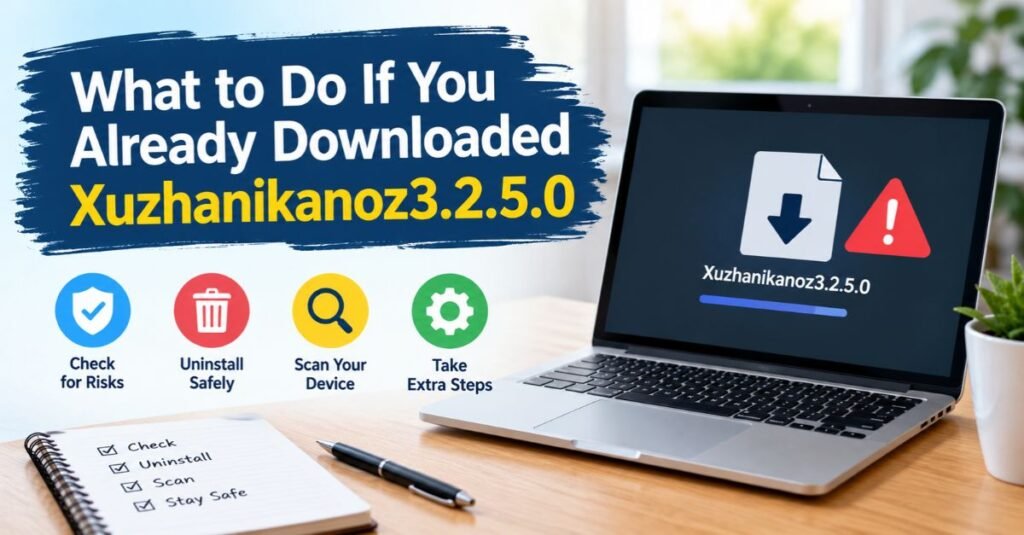
Stay calm. A downloaded file isn’t automatically an infection. Many files are harmless until you open them. Your first job is to avoid making things worse. Don’t double-click. Don’t run it “just to see.” Take a moment and gather facts.
Next, work out where the term appeared. Did it show up as a file on your device? Or did you see it in a log, a package list, or an error report? Each case differs. A name in a log may only be a label. A file in your Downloads folder deserves a closer look. Note the folder, the date, and the app that created it.
Steps to Take Before Opening the File
Leave the file closed. Check its location and its extension first. Is it an .exe, an .apk, a .zip, or a plain document? Look at the publisher and the digital signature. Think about where it came from. Then scan it with updated security software. Several malware detection methods exist, including signature scans and behavior checks. If anything feels off, delete the file or move it to a safe folder.
What to Do If You Have Already Installed It
Watch your device for changes. Look for odd pop-ups, new apps, browser changes, and disabled security tools. Notice strange network activity or slow performance. Run a full scan. Review the list of installed apps and remove anything you don’t recognize. Change important passwords from a clean device. If problems continue, ask a trusted professional for help. Here’s an illustrative case, not a real report. A user installs a “free optimizer” from an unknown site. A week later the browser homepage changes and a new toolbar appears. The user runs a full scan and removes the app. The browser settings return to normal. Quick action limited the harm.
Read More About: SimplifyDiggs.com Review 2026: Features, Content Quality, and Trustworthiness
Xuzhanikanoz3.2.5.0 vs. Verified Software Releases
A legitimate release gives you many things. You get a named maker, a real site, and clear documents. You see release notes and a signed installer. You can check a published checksum. You also find support and independent reviews. These items are the normal baseline for verified software releases.
Now compare that list with what exists for Xuzhanikanoz3.2.5.0 software. The gap isn’t about the name. It’s about evidence. Each missing item lowers your confidence. The table below lays it out side by side. It shows why caution fits this case better than excitement.
| Criteria | Verified Software | Xuzhanikanoz3.2.5.0 |
| Developer | Named and traceable | Not identified |
| Official website | Clear and active | Not established |
| Documentation | Detailed and current | Not found |
| Release notes | Published for each version | Not found |
| Signed installer | Yes | Unknown |
| Official checksum | Provided | Not found |
| Support | Available | Not found |
| Independent reviews | Several | Not confirmed |
Does Xuzhanikanoz3.2.5.0 Support Windows, Android, macOS, or Linux?
No verified compatibility information exists. Some pages say it works everywhere. None of them offer proof. A real developer lists supported systems, versions, and hardware needs. That list usually sits on the product page or in the manual. Without it, any platform claim is a guess. Don’t install anything on the strength of a guess.
Each operating system needs its own build. A Windows .exe won’t run on Android. An Android APK won’t run on macOS. App stores show the requirements next to each listing. If someone offers you a file that doesn’t fit your system, be suspicious. A mismatch can signal a mislabeled or unsafe file. Good application compatibility checks protect both your data and your time.
Why Is Xuzhanikanoz3.2.5.0 Appearing in Search Results?
Several reasons could explain it. Unusual words face little competition. Content writers may target them to win easy traffic. Some pages come from auto-generated text. Others are reposts of earlier blog articles. Curious readers also search the term and push it higher. No single reason is proven. Stay neutral and avoid accusations.
An odd word can spread fast through low-quality content networks. One site publishes a guess. Others copy it and add details. Soon the same claims appear across dozens of pages. Readers then assume the product must be real. This pattern is why strange names deserve a second look. A rising search count shows interest. It doesn’t show truth.
How to Research Unknown Software Names Correctly
The method below works for any strange software name. It takes a few minutes. It also builds a habit that protects you. Treat it as a short routine. Run it before every unfamiliar download. Over time it becomes automatic.
Good research is calm and patient. You aren’t trying to prove a name is bad. You’re trying to learn what the evidence supports. Collect facts. Sort them. Then decide. This is a core piece of software authenticity verification and of online information verification in general.
Start With Official and Primary Sources
Begin with the maker’s own pages. Check developer sites, official code repositories, app stores, and documentation. These sources can be traced to a real owner. Blogs and forums come later. If no primary source exists, say so plainly. Don’t fill the gap with someone else’s guess.
Separate Confirmed Facts From Unverified Claims
Sort every claim into one of three groups: observed, reported, or verified. Observed means you can see it yourself. Reported means someone said it. Verified means a reliable source backs it up. Most feature lists for this name fall under reported. Keeping the groups clean prevents slow drift from “someone said” to “everyone knows.”
Compare Publication Dates and Source Credibility
Check who published each page and when. Look for pages that copy each other word for word. Ask whether any source links to primary evidence. Newer isn’t always better. A recent post can still repeat an old rumor. Favor sources with named authors and a clear record. A page with no author and no date earns less trust.
Frequently Asked Questions About Xuzhanikanoz3.2.5.0
What Is Xuzhanikanoz3.2.5.0?
Xuzhanikanoz3.2.5.0 is an unverified tech term. It resembles a software or project name followed by a version number. No reliable source confirms its developer, purpose, or official release. Treat all descriptions as unconfirmed until primary documentation appears.
Is Xuzhanikanoz3.2.5.0 Real Software?
Reliable primary sources don’t confirm it as an established product. Some websites call it software, but their descriptions conflict. Without a named developer, official documentation, and a traceable download, you can’t treat it as real software yet.
What Does Xuzhanikanoz 3.2.5.0 Mean?
The number 3.2.5.0 looks like a version or build number. Its exact meaning is unknown. Only the creator can explain what each digit stands for. No verified versioning guide exists for this name.
Is Xuzhanikanoz3.2.5.0 Safe to Download?
Safety can’t be confirmed. No verified publisher or official download source exists. Don’t run files from unknown places. Check the developer, the digital signature, and the file hash first. If you can’t, skip the download.
Is Xuzhanikanoz3.2.5.0 Malware?
No reliable evidence says it’s malware. Still, no evidence says it’s safe. A real file with this name should be judged by its source, signature, permissions, and behavior. The name alone proves nothing either way.
Is Xuzhanikanoz3.2.5.0 a Device Optimization Tool?
Some articles say yes. Others describe a workflow or campaign platform. These claims clash with each other. Treat device optimization as a reported use only. Nothing confirms it, so don’t rely on it.
Who Developed Xuzhanikanoz3.2.5.0?
No reliable developer has been identified. No company, team, or person has claimed the name in a verifiable way. Without a maker, nobody stands behind the file. That’s a strong reason to be careful.
Is There an Official Xuzhanikanoz3.2.5.0 Website?
No clearly established official website exists. Some pages claim to offer it, but none prove ownership. Don’t assume a site is official just because it uses the name. Look for contact details and a traceable owner.
Where Can I Find a Verified Xuzhanikanoz3.2.5.0 Download?
No verified download source has been found. Avoid unfamiliar download pages and file-hosting sites. A safe download comes from a known developer or a trusted app store with clear details. If none exists, wait.
Why Do Websites Describe Xuzhanikanoz3.2.5.0 Differently?
No primary source anchors the description. So each site fills the gap with its own guess. Some copy others and add new claims. The result is a pile of conflicting stories. That’s why independent proof matters more than repetition.
conclusion
Xuzhanikanoz3.2.5.0 is an unverified term with a version-style number. Websites give it conflicting jobs. No confirmed developer, Xuzhanikanoz3.2.5.0 official website, or download source exists. That leaves you with plenty of claims and very little proof. So the safest view is simple. It’s unknown. Treat it that way.
Avoid two extremes. Don’t call it malware without evidence. Don’t trust a download just because a blog praises it. Verify first. Use trusted sources and keep your security tools active. Check the developer, the signature, and the hash. If real documentation appears later, update your view. Until then, stay curious and stay careful. A few minutes of checking can save you hours of repair.