

How to Install 35-ds3chipdus3: Easy Step-by-Step Guide for Beginners
You found a strange code. Maybe it sat on a chip. Maybe it popped up in a file name or an error message. Now you want to know how to install 35-ds3chipdus3. That’s a fair question. However, the name alone says very little. It could point to a hardware part, a software package, or a plain code string. This 35-ds3chipdus3 installation guide takes a safe, verify-first approach. You will learn how to identify the item, check 35-ds3chipdus3 compatibility, gather the right tools, and follow the correct path for your case. Each step stays simple. Each warning has a reason. By the end, you will know what to check, what to avoid, and when to call a professional.
What Is 35-ds3chipdus3 and How Does It Work?
So, what is 35-ds3chipdus3? Here is the honest answer. No official manufacturer page, datasheet, or publisher confirms it. The name appears in online guides. Those guides disagree with each other. Some call it a chip. Others call it a program. A few treat it as a plain code. A label like this can be a part number, a firmware tag, a file name, or an internal reference. Without a trusted source, any exact spec you read is a guess. Keep that in mind before you buy, download, or install anything.
Next comes the big question. How does 35-ds3chipdus3 work? The answer depends on what it truly is. A chip would handle signals on a circuit board. A software package would run instructions inside your operating system. A code string might only name a product or unlock a feature. Think of it like a street number. It points you to a place. It doesn’t tell you who lives there. Until you confirm the type, ignore promises about speed, power savings, or big performance jumps.
Is 35-ds3chipdus3 Hardware, Software, or an Executable Code?
Many readers ask, is 35-ds3chipdus3 hardware or software? Nobody can say for sure yet. Three options exist. It could be a physical part. It could be a software or firmware package. It could be an identifier that a program reads. Each option follows a different 35-ds3chipdus3 setup instructions path. A chip needs a compatible socket or board. A program needs a verified installer. A code needs the right app. Mixing these paths causes damage or security trouble. The table below shows the difference at a glance.
| Possible type | What it looks like | How you install it | Main risk |
| Hardware component | A small part with printed markings | Socket or solder onto a board | Electrical or physical damage |
| Software or firmware | A downloaded installer or package | Run a verified installer | Malware or system instability |
| Code or identifier | A string in a label, form, or message | Enter it in the correct app | Wrong use or scam pages |
Now consider 35-ds3chipdus3 executable code. An executable file runs commands on your device. That makes it powerful. It also makes it risky. A harmless-looking file can change settings, copy data, or add extra programs. Never open an unknown file just because a guide told you to. Check the publisher first. Scan the file with security software. Look for a valid digital signature. These habits form the core of executable file security. If a source can’t explain what a file does, skip it.
How to Identify the Correct 35-ds3chipdus3 Component
Start with how to identify 35-ds3chipdus3 by writing down the full name. Copy every letter, digit, and hyphen. One missing character can point to a different product. Look for the code on the board, the box, the manual, or the download page. Take a clear photo of any printed marks. Then compare your notes with the manufacturer’s technical documentation. This is hardware component identification at its simplest. Slow work now saves money later. As the old saying goes, measure twice and cut once.
Next, match the details. On a circuit board, note the board model and revision number. Check the package size, pin count, and voltage rating. For a file, check the name, size, publisher, and source. A real product usually has a datasheet or a support page. If you find none of these, pause. Don’t try different sockets until something fits. Don’t run a file you can’t trace. An unclear identity is a clear reason to stop and ask for help.
What to Check Before Installing 35-ds3chipdus3
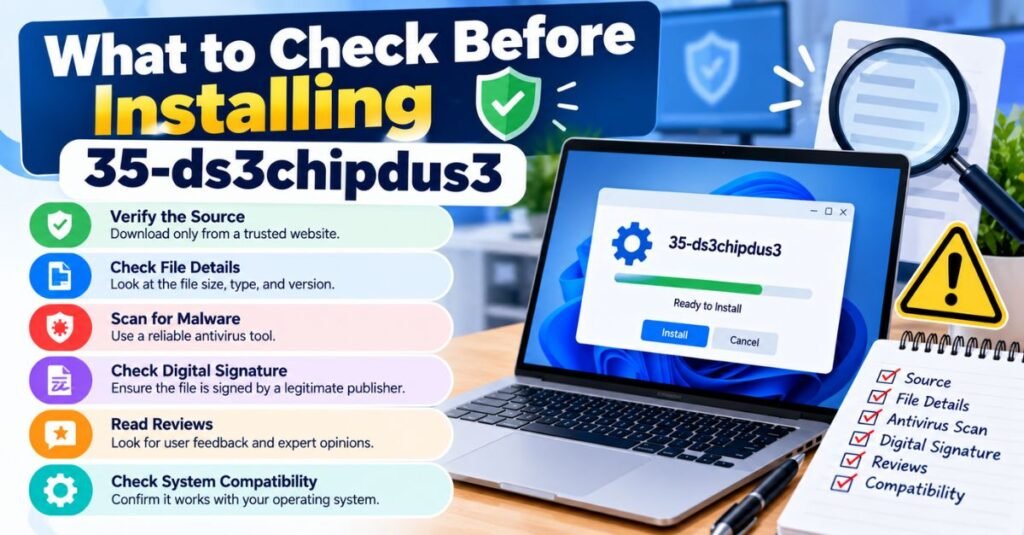
A short check can save hours of repair work. Before you start, confirm three things. The item must match your device. You must own the right tools. The source must be trustworthy. These checks cover the 35-ds3chipdus3 installation requirements for any path. They also support good computer maintenance habits that keep your system healthy. Skip them and you invite damage, crashes, or security problems. Take your time here. Nobody wins a prize for rushing.
Each check has its own purpose. Compatibility tells you whether the item fits your system. Tools tell you whether you can finish the job safely. Source checks tell you whether the item is real. Together they form a simple system configuration review. Write your answers on paper. Keep the notes handy during the install. If one answer is unclear, treat it as a “no” until proven otherwise. The sections below explain each check in plain steps.
Compatibility and System Requirements
35-ds3chipdus3 compatibility depends on the real product type. For hardware, match the socket, pin layout, voltage, and board support. For software, match the operating system, processor type, memory, and free storage. At the moment, no official source publishes 35-ds3chipdus3 system requirements. That means 35-ds3chipdus3 Windows compatibility can’t be confirmed either. Treat any site that lists exact requirements with caution. Run proper software compatibility checks only against documents from a verified publisher.
| Check | What to compare | Where to find it |
| Operating system | Windows, macOS, or Linux version | Publisher’s requirements page |
| Processor type | 32-bit, 64-bit, or ARM | System settings or device manual |
| Memory and storage | Free RAM and disk space | System information panel |
| Socket and pins | Pin count and layout | Datasheet and board manual |
| Voltage | Required power level | Datasheet |
Tools and Equipment Needed for Installation
35-ds3chipdus3 installation tools depend on the product type. For hardware, you may need a Phillips screwdriver, an antistatic wrist strap, a clean desk, and the service manual. Some parts need special rework gear. Don’t buy that gear until the part is confirmed. For software, you need a compatible computer, enough storage, admin rights, and a verified installer. Add backup storage in both cases. Keep the area dry and bright. Remove loose screws and metal objects from your workspace before you begin.
How to Verify the Source and Authenticity
Learning how to verify 35-ds3chipdus3 starts with the source. Look for an official manufacturer page, a datasheet, and a support contact. For files, check the publisher name and the digital signature. Compare the file size with the size on the official page. Use trusted official software download sources only. Be wary of pages that offer a download but never name a developer. Be wary of guarantees about speed boosts. Also avoid any page that asks you to turn off security tools. These signs don’t prove bad intent. They do deserve a closer look.
Read More About: Glorvix.com Review 2026: Honest SEO Services, Pricing, Features & Risks
How to Install 35-ds3chipdus3 Step by Step
Ready for the 35-ds3chipdus3 installation steps? Read this first. The steps below apply only after you confirm the item is a physical component. If it turns out to be software, skip ahead to the software section. This step-by-step installation tutorial is general guidance. It can’t replace the official manual. If the manual says something different, follow the manual. Nobody knows your board better than its maker.
The seven steps below work as a simple hardware installation guide. Each step has one goal and one main warning. Move in order. Don’t jump ahead. Take notes as you go. If any step feels unclear, stop and look up the answer. A paused install costs you minutes. A rushed install can cost you a motherboard.
| Step | Goal | Main warning |
| 1 | Back up and prepare | Don’t skip the backup |
| 2 | Power down and disconnect | Never open a power supply |
| 3 | Locate the spot | Don’t assume a socket exists |
| 4 | Check orientation | Never force a part |
| 5 | Install correctly | Don’t solder without skill |
| 6 | Inspect and close | Look for loose screws |
| 7 | Power on and verify | Watch for smells and noises |
Step 1: Back Up Your Data and Prepare the System
Good system backup procedures come first. Copy your important files to an external drive or a cloud account. Save a restore point if your system offers one. Write down your current settings and note your device model. Then clear a flat, dry, well-lit desk. Gather the manual, the tools, and the part. Keep drinks far away. A backup feels boring until the day you need it. On that day, it feels like a lifesaver.
Step 2: Power Down and Disconnect the Device
Next, shut the device down fully. Don’t use sleep mode. Unplug the power cable and remove every cable and extra device. Take out the battery if the manual says so. Good electronic component safety also means touching bare metal on the case to discharge static. Better still, wear an antistatic strap. Never open a power supply unit. It can hold dangerous voltage even when unplugged. Wait a few minutes before you open the case.
Step 3: Locate the Component or Installation Directory
Now find the right place. For motherboard component installation, check the board model and the manual’s diagram. Match the printed labels on the board with the diagram. Don’t assume a dedicated socket exists for this part. No documentation confirms where it would go. If the manual doesn’t list the part, stop here. For a software case, the equivalent step is finding the target folder named in the official instructions. Never invent a folder path.
Step 4: Check the Component’s Orientation and Placement
Correct chip orientation and placement matter a great deal. Most chips have a marker for Pin 1. It can be a dot, a notch, or a cut corner. The socket usually has a matching mark. Line them up before you press anything. Check the datasheet to be sure. If the notches don’t match, stop. Don’t push harder. Force bends pins and cracks boards. A part that won’t fit is usually the wrong part. Pause and recheck the model number.
Step 5: Install the Component Using the Correct Method
Use the method the manual names. Socketed parts often use a lever, clips, or gentle pressure. Soldered parts need exact heat and special tools. Soldering an unidentified chip isn’t a beginner task. Too much heat lifts pads and ruins traces. A solder bridge can short a circuit. If you lack experience, hire a qualified technician. The fee is small next to the cost of a dead board. Press gently and evenly. Stop at the first sign of resistance.
Step 6: Inspect the Installation and Reassemble the System
Before you close the case, look closely. Check for bent pins, loose screws, stray cables, and visible solder blobs. Make sure no tool stays inside. Confirm that every connector sits firmly. Use a flashlight to see into corners. Don’t touch exposed contacts with bare fingers. If cleaning is allowed, use only an electronics-safe method. Let everything dry fully. Then replace the panels without pinching any wires.
Step 7: Power On the Device and Verify Functionality
Reconnect the power and start the device. Watch and listen. Turn it off at once if you see sparks, smell burning, or hear odd noises. After a normal start, begin installation verification. Open your system tools and check that the part appears with the right name. Run the manufacturer’s diagnostics for device functionality testing. Read the error logs. A normal boot alone doesn’t prove success. Only the tests and the logs can show that everything works.
How to Install 35-ds3chipdus3 as Software
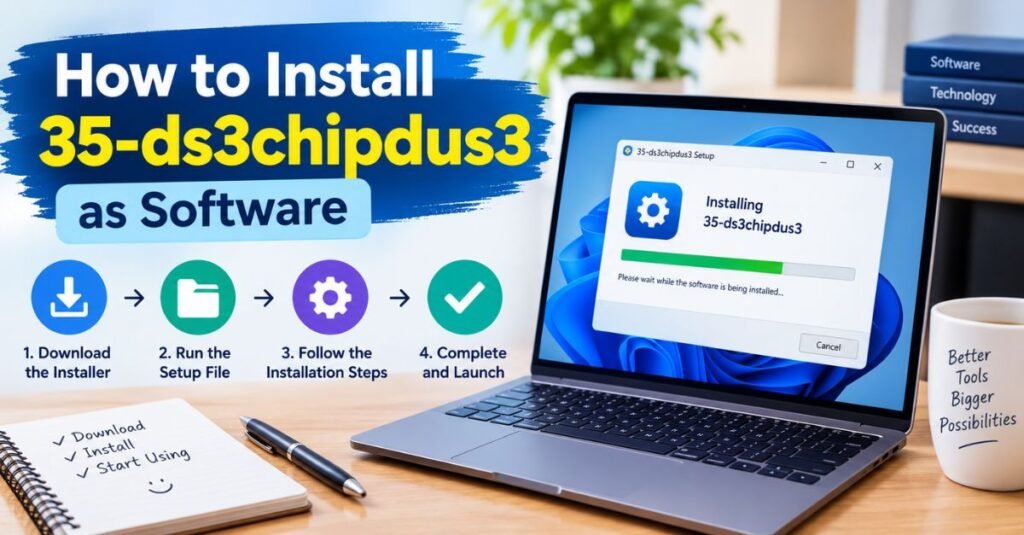
Software follows a different path from hardware. Don’t mix them. A program doesn’t need a screwdriver. A chip doesn’t need an installer wizard. This software installation process begins with trust. You must know who made the file and why. At present, no verified official publisher is known for this name. So this section describes a safe process only. It doesn’t point to a real 35-ds3chipdus3 download. Use it as a checklist when a real source appears.
Follow safe software installation practices at every stage. Download only from the maker’s own site. Read the notes before you click. Scan the file before you run it. Back up your data first. Install one item at a time. Keep the installer logs. These habits form secure installation practices that protect any device. They work for Windows, macOS, and Linux alike. A few calm minutes of care beat a long weekend of repairs.
Check the Official Download Source
Visit the publisher’s own website by typing the address yourself. Don’t rely on ads or random links. Look for a clear company name, a contact page, and a support section. Check that the page uses a secure connection. A genuine 35-ds3chipdus3 download page should explain what the file does and which systems it supports. If the page hides these basics, walk away. Mirror sites and file-sharing pages often repackage files with hidden extras.
Review the Installation Files and Documentation
Before you run anything, read the release notes and the file list. Check the version number and the date. Compare the file size with the official figure. Scan the file with trusted security software. Look at the permissions the program asks for. A simple tool shouldn’t need access to your contacts or camera. Keep the technical documentation open while you work. If the notes are missing or vague, treat the package as unverified and don’t run it.
Follow the Supported Installation Instructions
Use only the steps the publisher gives. Skip guides that tell you to paste long, unexplained commands. A command run with admin or root rights can change core files. It can also leak private data. Pick the default settings unless the guide gives a clear reason to change them. Make one change at a time. Note each step in a short log. If an error appears, stop and read it. Don’t click through warnings.
Verify the Installation and System Compatibility
When the installer finishes, check the result. Open the program’s version page and compare it with the expected version. Read the installation log for errors. Watch for strange pop-ups or changed browser settings. Confirm the program fits your system by reviewing the official requirements again. If anything looks off, uninstall it and restore your backup. Don’t assume a command such as a version check exists. Use only commands the publisher documents.
Read More About: MenBoosterMark Software Program: Complete Guide to Features, Safety, and Alternatives (2026)
How to Use 35-ds3chipdus3 Code Safely
Sometimes the item isn’t a part or a program. It’s just a code. A code can act as an identifier, a data value, or an instruction. Each type needs different handling. Treating a label like a command can break things. Treating a command like a label can hide real danger. The right move depends on where the code came from. The four sections below show a calm way to decide.
Picture the code as a key tag at a hotel desk. The tag has a number. The number tells staff which room it fits. It doesn’t open any door by itself. In the same way, a code needs the right system to give it meaning. Enter it only where it belongs. Keep your backup close. Move slowly. Safe habits turn a confusing string into a manageable task.
Identify Where the Code Appeared
Start with the source. Did the code appear on a chip, on a box, in an error message, in a file name, or on a web page? A printed label suggests a part number. An error message suggests a system reference. A file name suggests a software item. A web form suggests an activation field. Write down the exact place and take a screenshot. The origin often tells you which steps are safe and which are not.
Determine Whether It Is Data, an Identifier, or an Instruction
Now sort the code into one of three groups. Data is a value that a program reads. An identifier is a name that points to a product. An instruction tells a program to do something. Check the surrounding text for clues. A manual might say “enter this code.” A label might say “model.” If no document explains the code, don’t run it as a command. Ask the publisher or the seller to explain its meaning first.
Use the Correct Application or Interface
Enter the code only in the app, form, or tool that gave it to you. Don’t paste it into a terminal or a random website. Check the address bar before you type anything on a web page. Make sure the tool belongs to the real publisher. If the tool asks for passwords or payment details, stop and verify the page. A real activation field rarely needs more than the code and your account. Extra requests are a warning sign.
Back Up Your System Before Making Changes
Before any change, save a full backup or a restore point. Copy key files to an external drive. Note your current settings and software versions. If the code triggers a setting change, you can roll it back. Keep the backup until you are sure everything works well. Test a small change first. Then continue. A fresh backup turns a possible disaster into a minor delay.
Is 35-ds3chipdus3 Safe to Install?
The short answer is this: nobody can confirm its safety yet. Safety depends on what the item is and who made it. A real chip with a clear datasheet may be fine. A file from an unknown site may not be. Risks differ by type. Hardware can suffer electrical damage. Software can carry malware. Firmware can leave a device unable to start. Follow the 35-ds3chipdus3 safety precautions in the table below before you take any step.
| Risk type | What can go wrong | Safety precaution |
| Hardware | Bent pins, short circuits, dead board | Match specs and follow the manual |
| Software | Malware, data theft, instability | Use the official source and scan files |
| Firmware | A device that won’t start | Keep stable power and a recovery plan |
| Code | Scam pages or wrong commands | Enter it only in the verified tool |
Consider a simple example. Imagine a beginner named Sam who finds a guide online. The guide says to download a file and run it as admin. Sam can’t find the publisher. A careful reader would stop there. Sam could instead search for the code on the original device label. Sam could then contact the device maker. That small pause might prevent a stolen password or a broken laptop. This is an illustrative scenario, not a real report. It shows why source checks matter.
Common 35-ds3chipdus3 Installation Problems and Solutions
Most common installation problems come from skipped checks. Wrong model numbers, unsupported systems, and unsafe files cause most trouble. Good 35-ds3chipdus3 troubleshooting starts with a calm mind. Write down what happened. Note any error text exactly. Then work through simple causes first. Because the product’s identity isn’t verified, the table below lists general fixes. It doesn’t claim known faults for this name.
| Problem | Likely cause | What to do |
| Product can’t be identified | Wrong or partial model number | Check the label and manual again |
| Hardware doesn’t fit | Wrong part or wrong orientation | Stop and compare specs |
| Computer won’t start | Loose part or bad install | Disconnect power and review the manual |
| Installer fails | Unsupported system or damaged file | Check requirements and get a verified file |
| Security warning | Unknown publisher or bad signature | Don’t bypass it until verified |
| Device not recognized | Missing driver or connection issue | Run official diagnostics |
These 35-ds3chipdus3 setup errors may look scary. Yet most have simple causes. The system troubleshooting methods below help you narrow the problem step by step. Change one thing at a time. Test after each change. That way you always know what fixed or broke something. Avoid downloading “repair tools” from unknown sites. They often make things worse.
What to Do If the Computer Will Not Start
First, disconnect the power when it’s safe to do so. Don’t press the power button again and again. Open the case if you did a hardware install. Check that the part sits correctly and that all cables are tight. Look for burn marks or bent pins. Compare your work with the manual. If nothing helps, remove the new part and test the system without it. If the problem remains, ask a qualified technician for help.
How to Fix Installation Errors and Compatibility Issues
Learning how to fix installation errors begins with the exact message. Write it down or take a screenshot. Search the publisher’s help pages for that message. Next, recheck the system requirements and your operating system version. Free up disk space if needed. Download a fresh copy from the official site in case the first file was damaged. This is basic installation error resolution. If the error persists, restart the device and try once more before seeking help.
Read More About: SimplifyDiggs.com Review 2026: Features, Content Quality, and Trustworthiness
What to Do If the Code Is Not Recognized
When a program rejects the code, check the spelling first. Compare each letter, digit, and hyphen. Watch for look-alike characters such as zero and the letter O. Make sure you used the right app and the right version. Confirm that the code came from a trusted source. Some codes expire or work only once. If the code still fails, contact the publisher or the seller with a photo of the original label.
How to Handle a Command Not Found Error
A “command not found” message means the system doesn’t know that command. The tool may not exist on your device. It may also live in a folder your system can’t see. Check the spelling. Then confirm that the publisher documents the command. Don’t install random packages just to silence the message. Unknown packages can bring risk. If no official source mentions the command, assume it’s not real and stop.
What to Do If Security Software Blocks the File
Treat the block as a useful warning. Don’t turn off your protection right away. First, check the publisher and the source again. Scan the file with a second trusted tool if possible. Look up the publisher’s name and the file hash on the official page. If the source stays unclear, delete the file. If you confirm the file is genuine, ask the publisher how to add an exception safely.
How to Verify a Successful Installation
A successful install passes several checks. The product identity is confirmed. The steps match official documents. The system starts without new warnings. The device or app appears with the right name. Diagnostics finish with no errors. Normal use causes no strange behavior. Your backups remain safe. If you can’t confirm the product’s identity, don’t call the installation a success. A working computer alone doesn’t prove the job went well.
Hardware vs. Software Installation: Key Differences
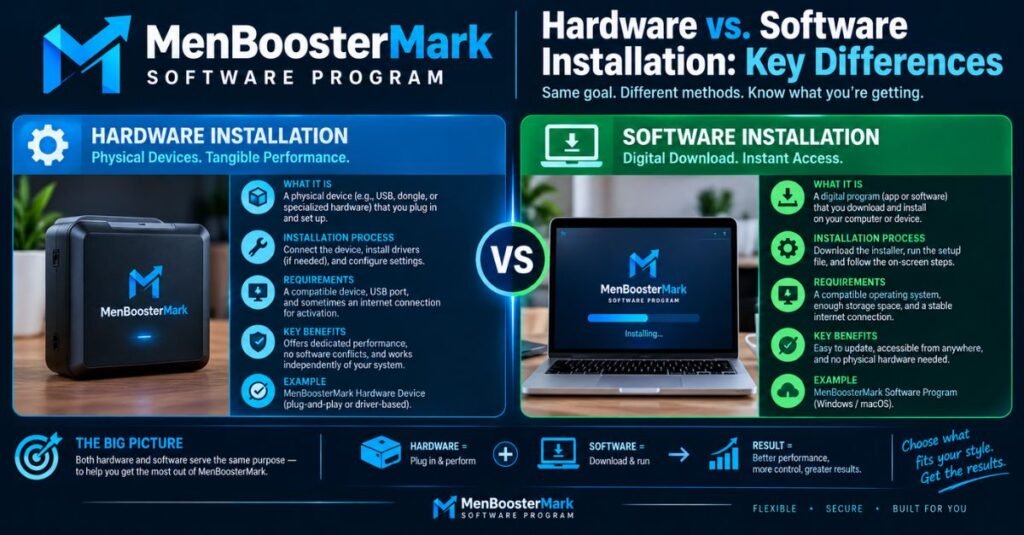
Hardware versus software installation differs in almost every way. Hardware needs physical care. You open cases, handle parts, and guard against static. Software needs digital care. You check sources, scan files, and read permissions. Both need a backup and a plan. Both need good documents. The wrong method for the wrong item causes the most trouble. Decide the type first. Then pick the path.
| Feature | Hardware installation | Software installation |
| Main need | Compatible part and board | Verified package and system |
| Preparation | Power off and antistatic care | Backup and compatibility check |
| Main risk | Physical or electrical damage | Security issues and crashes |
| Verification | Hardware recognition and diagnostics | Version info and logs |
| Common tools | Screwdriver and service manual | Official installer and system tools |
| Expert help | Electronics technician | IT support |
Keep one rule in mind. Never use an installer wizard for a bare chip. Never open a computer to install a code. These mix-ups waste time and cause harm. If you feel lost, return to the identification step. Ask where the item came from. Read its documents again. The right answer often sits in the original box or on the first download page.
Safety Tips for Installing 35-ds3chipdus3
Good habits protect your device and your data. Start by confirming the exact model before you touch anything. Read the manual from start to end. Back up your files. Use only trusted sources. Change one thing at a time. Keep notes on each step. These simple moves create a safe routine. They also make troubleshooting far easier later. As a handy motto, remember this: slow is smooth. Smooth is fast.
The table below lists key tips with short reasons. Use it as a quick check before any install. Print it if that helps. Share it with friends who like to tinker. A shared habit spreads safety. It also builds good computer maintenance routines over time. Small steps today prevent big headaches tomorrow.
| Tip | Why it matters |
| Confirm the exact model | Similar names can mean different products |
| Read the manual first | You learn the steps and the risks |
| Back up your data | You can restore your system if something fails |
| Use trusted sources | You lower the chance of malware |
| Change one thing at a time | You can trace any problem |
| Never force a part | Force bends pins and cracks boards |
| Keep recovery options ready | You can undo a failed update |
| Record your original settings | You can restore a working state |
35-ds3chipdus3 Buying Guide: What to Know Before You Buy
Before you buy anything labeled with this name, pause. The unusual code alone can’t prove who made the item. It can’t prove compatibility or authenticity either. Ask the seller for the product page, the datasheet, and the supported device list. Ask for the installation manual too. A real seller can answer these questions quickly. A seller who dodges them gives you a reason to leave. Remember that a long listing isn’t proof of quality.
Read More About: 88+MagFuseHub.com: A Complete Guide to Its Content, Features, and Benefits
Use the checklist below when you compare listings. Check the maker, the model, and the supported systems. Look at the return policy and the support contact. Pay attention to how the seller describes the product. Vague claims and huge promises deserve doubt. Good sellers describe limits as well as strengths. When in doubt, choose a product with clear documents over a product with a catchy name.
| What to check | What to look for |
| Manufacturer | A verifiable company and official page |
| Product identity | Exact model number and category |
| Compatibility | Supported board, device, or system |
| Documentation | Datasheet and installation manual |
| Authenticity | A traceable seller and supply chain |
| Return policy | Clear terms for faulty or wrong items |
| Support | Real contact details and help pages |
Do You Need a 35-ds3chipdus3 Installer?
Not until the item’s purpose and origin are clear. No verified basis exists for recommending a specific installer, driver, or firmware package under this name. Be careful with any site that offers a download without naming its developer. A button that says “download” proves nothing. If you found the code inside a manual, an error message, or a trusted package, use that source to find the right tool. If a seller can’t explain the product, skip the purchase.
How to Choose a Compatible and Reliable Component
Match the specs first. Check the socket type, pin count, voltage, and board support in the datasheet. Next, review the seller. Look for a traceable business, honest reviews, and a fair return policy. Check that the maker offers support. Compare two or three listings before you pick one. A reliable part comes with clear documents and a clear origin. If the listing hides these details, assume the risk is high and move on.
Where to Find Verified Documentation and Downloads
Start with the maker’s own website. Look for support pages, datasheets, and driver sections. Check the original packaging and the device manual. Look at the vendor’s help center. Use the device’s model number to search for official pages. Avoid forums and file-sharing sites for downloads. They can help with ideas but not with trusted files. Save a copy of each document you use. You may need it again during troubleshooting.
Frequently Asked Questions About 35-ds3chipdus3
These short answers cover the most common questions. Each one gives the main point first. Use them for a quick refresher.
If your situation is unusual, return to the identification steps. Confirm the item first. Then follow the matching path.
What Is 35-ds3chipdus3?
It’s an identifier found in online guides. No official source confirms whether it names a chip, a program, or a code. Check where you found it. Then verify the maker and the purpose before you install anything linked to the name.
How Do I Install 35-ds3chipdus3 on My Computer?
First learn the item’s type. Then use the maker’s instructions. This is the safest answer to how to install 35-ds3chipdus3 on a computer. Don’t follow generic chip steps or run unknown installers. Back up your data and check compatibility before you begin.
Is 35-ds3chipdus3 a Physical Chip or Software?
That remains unverified. Online pages describe it in different ways. The name alone can’t show whether it’s a part, a package, or a code. Find the original source of the term and check the documents from the real maker.
Can I Download 35-ds3chipdus3 for Windows?
No verified official source for a Windows file is known. Avoid downloads that carry this name unless you can confirm the publisher, the purpose, and the file’s authenticity. Check Windows support details on the maker’s site before you try anything.
What Tools Do I Need to Install 35-ds3chipdus3?
It depends on the item. Hardware may need a screwdriver, an antistatic strap, and a manual. Software needs a compatible system, a verified installer, and admin rights if required. Don’t buy special tools before you confirm the product type.
Is It Safe to Run 35-ds3chipdus3 Code?
Safety can’t be confirmed without knowing the source. Don’t run it as a command unless the publisher documents that use. Enter it only in the tool that provided it. Scan files first and back up your system before making changes.
What Should I Do If the Installation Fails?
Write down the exact error message. Recheck the model number, the system requirements, and the source. Get a fresh file from the official site if needed. Avoid unknown repair tools. If hardware is involved, disconnect the power and ask a technician.
How Can I Confirm That 35-ds3chipdus3 Works Correctly?
Use the maker’s own tests. For hardware, check that the system names the part and run diagnostics. For software, check the version page and logs. A normal start-up alone isn’t enough to prove the item works well.
Conclusion
The key to how to install 35-ds3chipdus3 is simple. Identify the item first. Confirm the maker and the purpose. Check 35-ds3chipdus3 compatibility and requirements. Then follow the right path for hardware, software, or code. Back up your data before every change. Use trusted sources only. Test the result with real diagnostics. These steps turn a confusing task into a calm routine.
If the name stays unexplained, hold off on installing anything linked to it. Look at where you found the code. Ask the seller or the publisher for proof. Read the original manual again. A careful pause protects your device, your data, and your wallet. Use this 35-ds3chipdus3 installation guide as a checklist. When the facts are clear, you can move forward with confidence.