
TheJavaSea.me Leaks AIO-TLP371: Facts, Risks, and Safety Guide (2026)
You may have seen TheJavaSea.me Leaks AIO-TLP371 in a search box or a forum post. The name sounds serious. It makes people wonder whether a big confirmed data breach just happened. That worry is fair, but the facts point somewhere else.
The label looks like a name for an archive in a public forum listing. It isn’t proof of a hacked company or a stolen password list. This data leak safety guide explains what we know and what we don’t. It also shows you how to protect yourself and where to report problems.
What Is TheJavaSea.me Leaks AIO-TLP371?
TheJavaSea.me leaks AIO-TLP371 is a label tied to a forum listing for adult media. Public search results show it online. No security advisory, court record, or regulator statement confirms where the files came from. So the label tells us it exists, and nothing more.
One public listing appears to date from November 2024. That means the label isn’t proof of a new 2026 event. Fresh articles often make old items look new. Keep this in mind whenever you see online data leaks presented as breaking news.
Understanding TheJavaSea.me and the AIO-TLP371 Label
TheJavaSea.me looks like a forum-style site where users post release names and download links. The AIO-TLP371 leak label works like a title on a box. Anyone can write anything on a box. This TheJavaSea.me review can’t confirm who made the files, whether the descriptions are true, or whether the people shown agreed to any sharing.
Why Is AIO-TLP371 Attracting Online Attention?
People search for “leak” terms out of curiosity and fear. Some want to know if their data is inside. Others click sensational headlines. Scammers know this, so they build pages that copy the label and push suspicious download links. Attention doesn’t equal truth, and it often equals risk.
What Does AIO-TLP371 Mean?
If you ask what AIO-TLP371 mean, the honest answer is that it’s an informal tag. It has two parts. Neither part proves a breach, a date, or a victim. The AIO-TLP371 meaning comes from forum habits, not from any official standard.
Think of it like a nickname on a mixtape. The name tells you how someone chose to label it. It tells you nothing about the songs inside. Treat the label the same way.
What Does AIO Mean in This Context?
AIO usually stands for “all in one.” Online, it describes a bundle of files gathered under a single name. It doesn’t promise the bundle is complete or real. Someone can stuff a bundle with old, copied, or fake material and still call it AIO.
Is TLP371 an Official Traffic Light Protocol Classification?
No. The Traffic Light Protocol classification from FIRST has only a few labels. They tell security teams how far they may share information. TLP371 isn’t among them, so it isn’t an official cybersecurity classification.
| Official TLP label | Meaning in simple words |
| TLP:RED | For named recipients only. No wider sharing. |
| TLP:AMBER+STRICT | Share only inside your own organization. |
| TLP:AMBER | Share inside your organization and with clients who need it. |
| TLP:GREEN | Share with the wider community, but not publicly. |
| TLP:CLEAR | No limit on sharing. |
What Is Verified and What Remains Unconfirmed?
A good rule helps here. Separate what you can prove from what you only hear. This habit is the heart of data breach verification. It also helps with how to verify online data breach claims of any kind.
The table below sums up the current picture. It shows how little rests on solid ground. Read it before you share or believe any dramatic post.
| Question | Status |
| Does the label appear in public listings? | Yes, based on public indexing |
| Is it a confirmed data breach? | No reliable evidence |
| Who created the files? | Unconfirmed |
| Are the descriptions accurate? | Unconfirmed |
| Did everyone shown agree to sharing? | Unconfirmed |
| Were all people shown adults? | Unconfirmed |
| Are the download links safe? | Unconfirmed, and risky to assume |
| Does it link to leaked passwords? | No evidence |
Is TheJavaSea.me AIO-TLP371 a Confirmed Data Breach?
No reliable source confirms it. No company has announced a breach tied to this label. No regulator or court has described one either. Until that changes, call it an unverified archive label and nothing stronger.
What Evidence Is Needed to Confirm a Data Leak?
A real case leaves a paper trail. You would expect an official notice from the affected company, a regulator statement, or a court filing. A respected security researcher could also confirm it. Strong reports name the date, the service, and the type of data involved. Without those details, a claim stays a rumor.
How to Distinguish Verified Facts From Online Rumors
Start with the source. Ask who wrote the claim and what proof they show. Look for dates, named services, and independent backing. Be wary of round numbers, big promises, and pressure to click. A careful writer says “we don’t know” when that’s the truth.
Read More About: 76+Afextop com Review: What It Is, What It Offers, and Is It Safe to Use?
Why Repackaged Data and Unsupported Claims Can Be Misleading
Old data gets a second life all the time. Someone bundles it, gives it a new name, and posts it as fresh. This is the core of identifying repackaged leaked data. Readers then panic over a “new” leak that is really years old. Always check the original date before you act.
What Are the Risks of Opening or Downloading AIO-TLP371 Files?
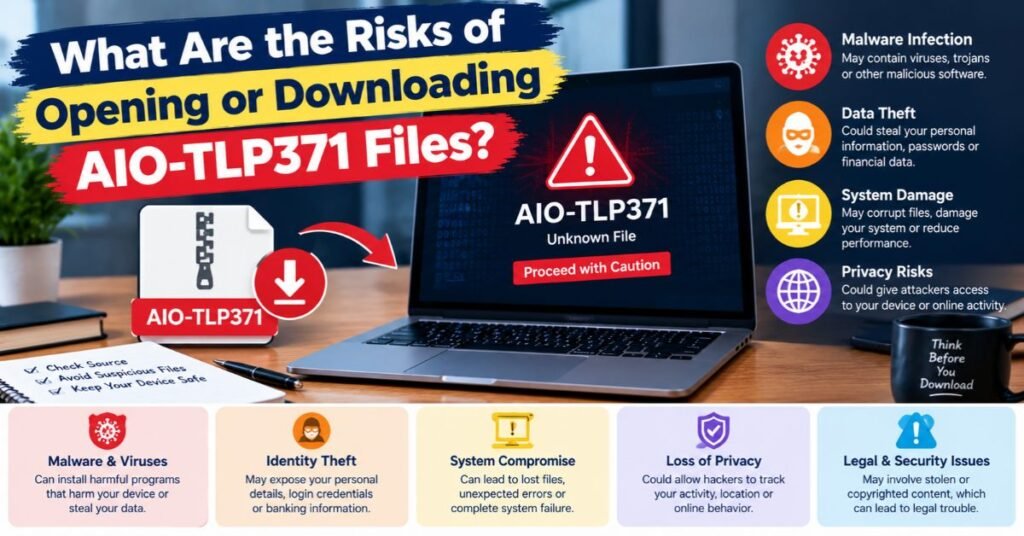
Picture an unmarked package on your doorstep. You don’t know the sender. You don’t know what’s inside. Would you open it in your living room? Downloading from an unknown archive is just as unwise. These are the risks of downloading leaked files, and they’re real.
The table below gives a quick view. Each risk gets a closer look right after it. Together they form the main cybersecurity risks around this label.
| Risk | What can happen |
| Malware | Your device gets infected |
| Phishing | You lose passwords or money |
| Privacy exposure | Trackers collect your data |
| Image-based abuse | You may spread harm to real people |
| Legal trouble | You may break laws where you live |
Malware and Malicious Downloads
Fake “mirror” pages are common around leak labels. Many hide malware and malicious downloads inside archives or installers. A file may look like a simple folder. Once opened, it can steal data or lock your device. The U.S. agency CISA advises people not to click suspicious links or open unexpected files. That advice fits here.
Phishing, Password Theft, and Account Takeovers
Pages that promise “free access” often run phishing attacks. They ask you to log in or “verify your age.” Then they grab your details for password theft. Criminals use stolen logins to start account takeovers. Learn ways to identify phishing links by checking the web address closely and doubting any urgent request.
Personal Privacy and Data Exposure
Shady sites track visitors. They use hidden scripts, forced redirects, and fake alerts. Some trick you into allowing browser notifications, which later spam you with scams. This leads to personal information exposure even if you never download a thing. Good habits support online privacy protection and keep your details safer.
Image-Based Abuse and Nonconsensual Content
A forum label can’t prove consent. Intimate images may come from hacked accounts, stolen phones, or blackmail. The FTC describes image-based abuse as making or sharing intimate images without permission. This includes real, edited, and AI-made images. Opening, saving, or sharing such files can deepen harm to the people shown. These are nonconsensual intimate images, and every view matters to the victim.
Legal and Ethical Risks of Sharing Leaked Material
Laws differ from country to country. Many places punish sharing intimate images without consent. Age adds another layer, because material showing minors is illegal almost everywhere. If you can’t verify consent, age, and source, don’t pass the files along. For a personal legal question, talk to a qualified attorney.
How to Check Whether Your Personal Information Was Exposed
The label alone doesn’t prove your passwords leaked. Still, it’s smart to check. Many people ask how to check if personal information was leaked. The steps below work for any suspected leak. They also support steady data breach prevention in daily life.
Think of this as a routine health checkup. You aren’t sick, but you look anyway. A few minutes now can save weeks of trouble later. Start with the tools below.
Use a Reputable Data Breach-Checking Service
Data breach checking services let you enter an email address and see past exposures. Have I Been Pwned is a well-known free option. Never type your password into any checker. A trustworthy tool only needs your email. A result shows past breaches and doesn’t mean today’s risk.
Review Account-Security Alerts and Login Activity
Open the security page of your main accounts. Look for logins from unknown places or devices. Check recent alerts from your email provider and social apps. Strange activity is an early sign of trouble. Good account security starts with noticing small changes.
Read More About: How to Fix xud3.g5-fo9z Python: Easy & Safe Solutions
Check Your Password Manager for Compromised Passwords
Many password managers flag compromised passwords and reused ones. Run the built-in check. Replace every weak or repeated password with a new, unique one. A manager makes this easy because you remember only one master password.
Contact the Affected Organization if Necessary
If a real company announces a breach, follow its official notice. Use contact details from its true website, not from an email link. Ask what data was exposed and what help it offers. Scammers love to imitate breach notices, so be careful.
What to Do If Your Information Appears in a Leak
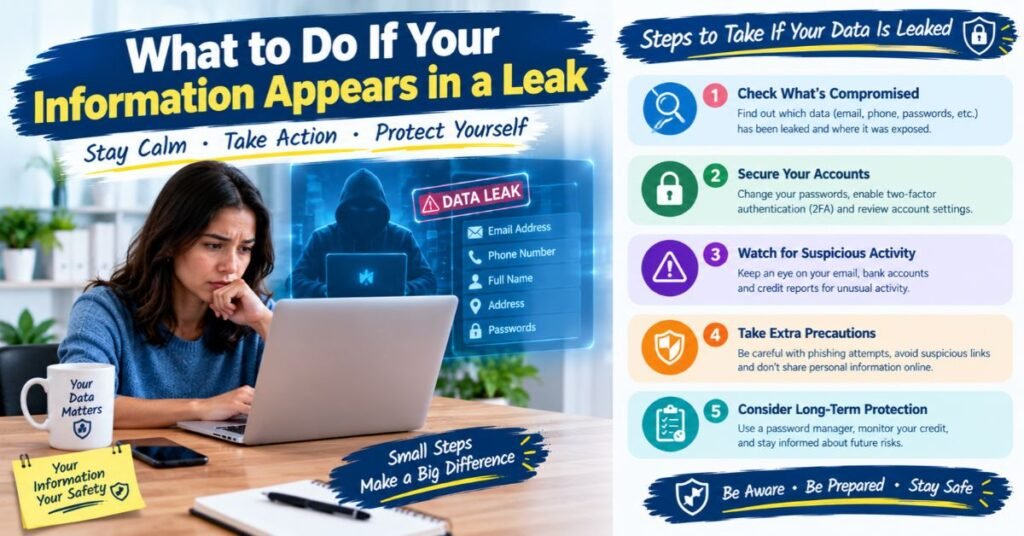
Stay calm and move step by step. Panic leads to mistakes. These steps answer how to protect accounts after a data leak. They also cover steps to secure compromised accounts, and they form a simple plan for responding to suspected data exposure.
Act on your most important accounts first. Email and banking come before social media. Your email matters most because it resets other passwords. Work through the sections below in order.
Change Compromised Passwords and Enable Multifactor Authentication
Change any exposed password right away. Pick a long, unique one for each account. Then turn on multifactor authentication. An authenticator app or a security key works better than text messages. Even if a thief learns your password, the second step can stop them.
Secure Your Devices and Important Accounts
Update your phone, computer, and browser. Run a full security scan. Check the recovery email and phone number on each key account. Attackers sometimes swap these to keep access. Strong habits like these build real personal data protection.
Contact Your Bank if Financial Information Was Exposed
If card or bank details may be exposed, call your bank. Use the number on your card. Ask about alerts, new cards, and extra monitoring. In many countries you can also freeze your credit file. A quick call can stop fraud before it grows.
Report Suspected Fraud, Threats, or Extortion
If someone demands money or more images, don’t pay. Don’t send anything else. Save the messages and stop contact. Then use online fraud reporting channels or call local police. In the United States, you can also report at tips.fbi.gov. This is a core step in cybersecurity incident response.
How to Request Removal of Leaked or Intimate Content
Removal takes a few separate steps. Removing a page from Google doesn’t erase it from the host site. Both steps matter. This section covers leaked information removal and leaked content removal in plain terms, including how to remove leaked content from search results and how to request website content removal.
The table below gives the full flow at a glance. Each step is explained after it. Work through them in order and keep notes as you go.
| Step | Action | Where |
| 1 | Record the web address | Your private notes |
| 2 | Ask the host to remove it | The platform’s report form |
| 3 | Ask Google to hide the result | Google’s removal form |
| 4 | Block copies with hashing | StopNCII or Take It Down |
| 5 | Report illegal content | Police or NCMEC |
Document the URL Without Downloading or Sharing the Files
Write down the page address, username, date, and time. Save any threats you received. Don’t download the files and don’t send them to friends. A lawyer, advocate, or police officer can explain how to keep evidence safely. Your notes are enough to start a report.
Submit a Takedown Request to the Hosting Platform
Find the site’s abuse or privacy form and send a hosting platform takedown request. In the United States, the TAKE IT DOWN Act requires covered platforms to offer a removal process. It sets a 48-hour deadline after a valid request. Rules differ in other countries, and you should confirm current details on the FTC site. Name the exact pages and say the content is shared without consent.
Request Removal From Google Search Results
Google lets people submit a Google content removal request for sexual content shared without consent. Use Google’s official removal page and add each exact link. Google may then hide those results from Search. The source site still needs its own request.
Read More About: 74+DreamMeaniing com Review: Features, Safety, Privacy, and Alternatives
Use an Appropriate Image-Hashing or Removal Service
Image-hashing services make a digital fingerprint on your own device. Partner platforms then block matching images. StopNCII.org serves people who were adults in the image. Take It Down from NCMEC serves images taken before age 18. Use only files you already own, and never download a copy from a forum.
Report Nonconsensual Images and Suspected Illegal Content
Learn reporting nonconsensual intimate images steps early. If anyone shown may be under 18, report the page address to the NCMEC CyberTipline. Don’t open or save the material to report it. Outside the United States, use your national hotline or local police.
What to Do If You Already Opened a Suspicious Link
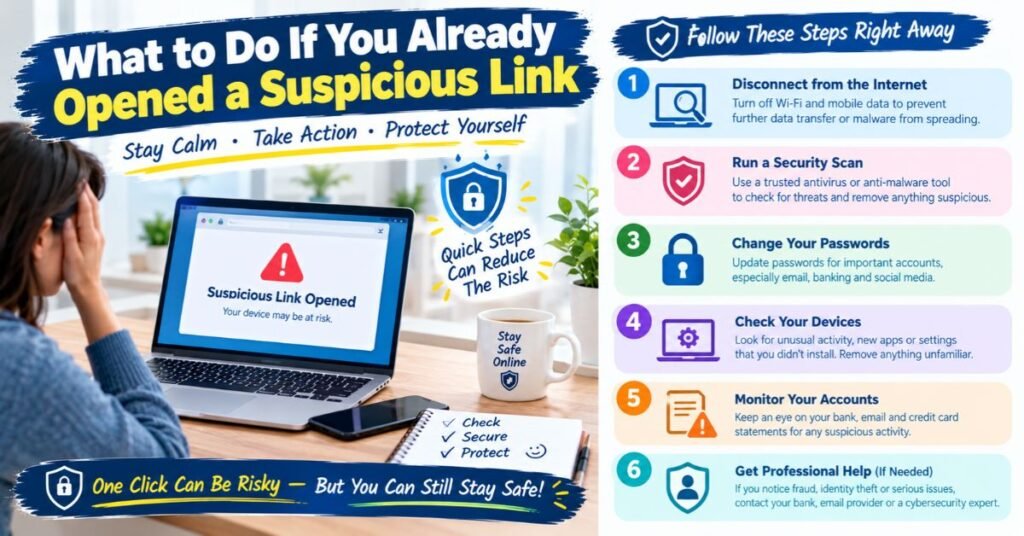
Take a breath. A single click rarely ruins your device. Trouble starts when you download a file, enter a password, or allow alerts. Knowing safe handling of suspicious archives also means leaving them closed. Use the quick triage below.
A simple case shows how this works. Imagine a reader named Sam who clicks a “free access” page. Sam sees a login box and types an email and password. Sam then changes that password from a different device and turns on a second sign-in step. Nothing bad follows. Fast action made the difference. This is an illustrative example, not a real report.
Disconnect and Scan Your Device if Malware Is Suspected
If you downloaded or opened a file, disconnect from the internet. Run a full scan with trusted security software. Remove anything unknown. If the device still acts strangely, ask a professional or reset it. Don’t run or extract the archive again.
Read More About: TRWho.com Tech Review 2026: Features, Security, Reliability, and Credibility
Change Passwords From a Trusted Device
Use a clean phone or computer. Change any password you entered on the suspicious page. Do the same for accounts that share that password. Skip reuse from now on. Each account should have its own strong password.
Review Recent Logins and Revoke Suspicious Sessions
Sign out of all devices on key accounts. Remove unknown sessions and apps. Check your recovery email and phone number. The FTC explains how to recover a hacked account in clear steps.
Watch for Phishing Messages and Unauthorized Transactions
Expect odd emails and texts for a while. Don’t tap links in surprise messages. Check bank and card statements weekly. Report any charge you don’t recognize at once. Staying alert is part of lasting digital privacy and data protection.
How to Evaluate Future Claims About AIO-TLP371
New posts about this label will keep appearing. Some will be careful. Many won’t. A few habits help you sort them out. They also build your skill at protecting personal information online.
Ask one simple question each time. “What proof does this page show?” If the answer is “none,” move on. The sections below turn that question into a routine.
Good rule: A calm “we don’t know yet” beats a loud claim with no proof.
Look for Independent and Credible Sources
Trust official notices, regulators, courts, and known security researchers. Check whether several independent sources agree. One blog repeating another isn’t confirmation. Credible writers show their evidence and explain their limits.
Verify Dates, Evidence, and Reported Statistics
Check when the item first appeared. Look for named services, data types, and clear numbers. Be careful with huge figures that have no source. Real reports explain how the numbers were counted.
Check Whether Old or Repackaged Data Is Being Presented as New
Search the label with earlier years. Look for older posts that match the “new” claim. If the same material appeared before, treat the new story as recycled. This habit protects you from fake alarms.
Avoid Suspicious Download Links and Sensational Headlines
Skip pages that push downloads, mirrors, or paid access. Ignore headlines built to scare you. Real safety advice rarely asks you to click anything risky. Stay away from suspicious website links altogether.
FAQ’s
What Is TheJavaSea.me Leaks AIO-TLP371?
It’s an unverified archive label linked by public listings to adult media on a forum-style site. It isn’t a proven credential leak. Nobody has shown who made the files or whether they were shared with consent.
Is AIO-TLP371 a Confirmed Data Breach?
No reliable evidence says so. No company, regulator, or court has confirmed a breach. Treat any stronger claim as unproven until credible proof appears.
Is TLP371 an Official Cybersecurity Classification?
No. FIRST’s Traffic Light Protocol uses TLP:RED, TLP:AMBER+STRICT, TLP:AMBER, TLP:GREEN, and TLP:CLEAR. TLP371 isn’t one of them. It looks like part of an archive name.
Is TheJavaSea.me Safe to Visit?
Nobody can promise that. Leak-style sites often show tricky ads, risky redirects, and bad downloads. They may also host material shared without consent. Avoid download links and never enter passwords or payment details there.
Can Changing My Password Protect Me From a Data Leak?
It helps when your password was exposed, reused, or typed into a suspicious page. It doesn’t fix every risk. Add multifactor authentication and check your active sessions too.
How Can I Remove Intimate Images From Google?
Use Google’s personal sexual content removal form and submit the exact links. Google may hide the results from Search. You must also ask the host site to delete the content itself.
Should I Download the Archive to Check Whether I Am Included?
No. Downloading adds malware, privacy, and legal risks. It may also spread harm to others. Use breach checkers, platform reports, Google’s form, StopNCII, Take It Down, or a trusted professional instead.
Conclusion
TheJavaSea.me Leaks AIO-TLP371 is best seen as an unverified archive label. Public listings link it to adult media. No solid proof shows a confirmed data breach. The label isn’t a Traffic Light Protocol classification either. Facts matter more than fear here.
Keep three actions in mind. Don’t download or share the archive. Document any page that harms you and report it. Use removal tools like Google’s form, StopNCII, and Take It Down. These steps support strong data breach prevention and calm cybersecurity incident response. Stay curious, stay careful, and stay kind to the people behind every image.